
Mind’s Role in Nature
The common assumption of a fundamental separation between science and religious faiths resonates with the common assumption of a fundamental separation between minds and brains. Indeed, many take it for granted that religious faiths and ethics are creations of the human mind. Maybe they are, but, even if so, they are not thereby either invalidated or isolated from science. If minds are thought of as being fundamentally separate from brains, then minds, faiths, and morality can be thought of as existing within a fundamentally different realm from that of brains and science. Recent discoveries relating basic aspects of mental life to their cellular foundations may therefore be of interest to many in the ISSR and beyond because they imply that religious faiths and science are complementary; not opposed. I conclude that science and religious faiths are complementary, but perhaps as different routes to a common destination. Both have things of value to offer, with those on which they agree, such as cooperative morality, being particularly valuable. To the extent that there are things on which they agree they cannot be concerned with fundamentally distinct and incomparable issues. By emphasising commonalities with science different faiths may see more clearly what they share with each other.
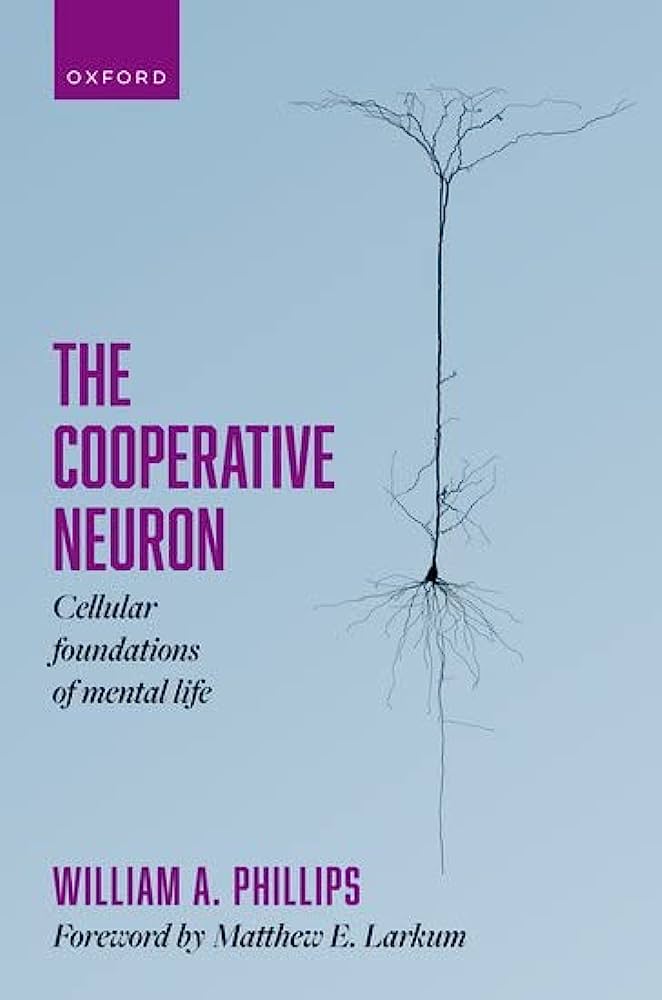
The conceptual revolution that is arising from recent discoveries within the sciences of brain and mind is summarized for a wide audience by my book The Cooperative Neuron: Cellular foundations of mental life, which is scheduled for publication by Oxford University Press (OUP) in April 2023. It is advertised on the OUP and Amazon websites where its contents and endorsements can be seen. It does not present a crystalized neuroscientific consensus because this field of research is in its infancy, so we can assume that the perspective that it outlines will have flaws that need correction. To facilitate such improvements, this book presents the key advances in sufficient detail for experts to assess, while giving lay readers a sense of the issues at stake. These include ethical and teleological issues, so members of the ISSR who are painfully aware of the naiveties of reductionism, eliminative materialism, and ‘neurobabble’, are appropriate assessors of what could be seen, perhaps rightly, as the book’s moralistic pretensions. It is often claimed that science is concerned only with facts and shows human life to be a minute speck within a vast, hostile, purposeless cosmos. In contrast to such claims, religious insights are usually seen as being primarily concerned with ethical issues and as implying a deep purpose in life.
The view of science and religious faiths as being fundamentally separate was well expressed by Lord Balfour, a philosopher who was prime minister of the UK from 1902 to 1905. In an introduction to a far-seeing book on Science Religion and Reality, edited by Joseph Needham (1925) Balfour declared: “The conception of a material universe, overwhelming in its complexity and splendour … certainly cannot explain mind. … our action can never be adequately explained in terms of entities which neither think, nor feel, nor purpose, nor know. It constitutes a spiritual invasion of the physical world: it is a miracle” (Section XII, pages 14-16).
We now know that the cosmos is not in essence hostile to life but has cosmological parameters that are fine-tuned to a surprisingly friendly extent. In searching for further harmonies between scientific and religious perspectives I was surprised to find glimmerings of them in essays by Bertrand Russell, who in my teenage years set me on the path to my still undimmed faith in science. In Mysticism and Logic and Other Essays (1917) Russell says, “In advocating scientific restraint and balance … we are only urging … that freedom from practical pre-occupations which have been inculcated by all the great religions of the world.” (page 18), and “A strange mystery it is that Nature, omnipotent but blind … has brought forth at last a child, subject still to her power, but gifted with sight, with knowledge of good and evil, with the capacity of judging the works of his unthinking Mother. … Man is yet free, during his brief years, to examine, to criticize, to know, and in imagination to create.” (page 48).
Thus, Russell advocates seeing insights offered by religious faiths as influencing our attitudes to the realities discovered by science. The potential of an overlap between science and religious faiths is also suggested by Russell’s view of logic and mathematics as a core part of the a priori beliefs on which science depends. By extending that acknowledgment of the reality and importance of a priori beliefs, many faiths can be seen as offering a priori insights concerning purpose and morality in our mental lives and beyond. Some of the things that Russell said about mind in 1917 can now be seen to be seriously misguided because the sciences of brain and mind were then embryonic. Nevertheless, the potential harmonization of scientific and religious faiths that he hinted at then seems to have even greater potential now because the subjective ‘attitudes’ of mind that were central to his argument then are now being objectivized by the sciences of brain and mind.
The Cooperative Neuron describes and contributes to a conceptual revolution that is occurring in the neurobiological, psychological, and computer sciences. Twentieth century psychology and systems neuroscience assumed that neurons in general sum all their synaptic inputs, and then inform other neurons of the extent to which that net sum exceeds a threshold. In contrast to that assumption, it has been discovered that many neurons in the mammalian brain have two functionally distinct sets of inputs. One set provides the inputs about which the neuron usually transmits information. The other set amplifies that transmission when it is useful to do so in the context of information being transmitted by other neurons. This form of context-sensitive information processing is cooperative in that it seeks agreement between the active neurons, thus reducing conflict both within and between minds. This cooperative context-sensitivity provides cellular foundations for basic cognitive capabilities, so it has fundamental implications for our understanding of relations between brain and mind, and thus for relations between science and religious faiths.
The ability of many neocortical neurons to cooperate by amplifying their outputs when appropriate in the current context was revealed by using Nobel-prize winning techniques to explore processes of communication within individual neurons. These investigations show that a large and special subset of the pyramidal neurons that are widely distributed throughout the mammalian neocortex can do more than psychologists and systems neuroscientists long assumed to be possible for any neuron. They can use one subset of their inputs as a context within which to amplify transmission of information about their other inputs when that increases the coherence and usefulness of the system’s activity overall. Thus, they lead toward some form of information-theoretic judicious holism, even though they involve intracellular discoveries. Furthermore, as these context-sensitive cellular mechanisms can malfunction in various ways, these discoveries also cast light on epileptic, psychotic, cognitive and many other psychopathologies. They also support a perspective on the neuronal bases of conscious experience that resonates strongly with conceptions of morality as cooperation.
The empirical and conceptual advances summarized in The Cooperative Neuron also resonate strongly with Buddhist assumptions of the ubiquity of change, interdependence, and selflessness, as described by Trin Xuan Thuan, an astronomer and cosmologist who wrote The Quantum and the Lotus (2004) together with Matthieu Ricard, a molecular biologist who became a Buddhist monk. They present Buddhism as being primarily concerned with making mental life more wholesome by contemplative practices that provide insights into reality and thereby reduce suffering. These Buddhist insights prefigure twentieth century scientific conceptions of relativity and interdependence in all things. Furthermore, impermanence, change, and growth are central tenets of the Buddhist tradition and those intuitions are realized in the historical sciences of cosmology, geology, biology, and developmental psychology as well as being intrinsic to hopes of change for the better in the lives of individual people. Finally, its core assumption of interdependence leads to cooperative unselfish moral attitudes.
The close coherence between those Buddhist insights and advances in the sciences of brain and mind does not imply that timeless, overarching, principles of morality and purpose advocated by other faiths must be mistaken. Buddhist insights primarily concern conceptions of mental life that have been tried and tested by more than two thousand years of contemplative practice, so it is not surprising that they have a scientific basis. Insights and beliefs of other faiths will also surely be strengthened if they can be harmonized with what we now know about relations between mind and brain. Members of the ISSR are in an exceptional position to assess attempts to seek that harmony.
The ethical subplot to the story told by The Cooperative Neuron is conveyed by its title, which is an explicit riposte to The Selfish Gene. Though he is famous for his emphasis upon selfishness, Richard Dawkins is well-aware that genes must be cooperative. As I see it, for neurons, as for genes and for life in general, cooperation is far more fundamental than selfishness. Conflicts between and within religious faiths can be as deep, or deeper, than those between them and science. That prevalence of conflict contrasts with the wide consensus within science, where disagreements tend to occur only at its expanding edge. Is it too much to hope that by strengthening their connections with science different religious faiths may come to see more clearly what they share with each other?
A key issue for all faiths is whether they do or do not emphasize things that are uniquely human. It is often taken for granted that evolutionary biology shows that nothing of importance is uniquely human. In contrast to that assumption, Chapter 6 of The Cooperative Neuron, which is on evolution and development, emphasizes recent discoveries showing that some key aspects of cellular anatomy and physiology in the neocortex are uniquely human, as are theology and science. Furthermore, as emphasized by Ronald Cole-Turner, a leading expert on the ethics of genetic technology, including gene editing and synthetic biology, those sciences raise uniquely human ethical issues that all faiths must face. Similarly, neurobiologically inspired machine learning technology also raises such issues. Chapter 8 of The Cooperative Neuron outlines machine learning algorithms inspired by the abilities of cooperative context-sensitive neocortical neurons. If advances in the development of such algorithms occur at the rate of other developments in neurobiologically inspired forms of what is misleadingly called ‘artificial intelligence’, then that ‘synthetic psychology’ will greatly increase the number and urgency of issues to be faced.
Thus, the view to which I am led by these advances in the sciences of brain and mind is that science and religious faiths provide complementary grounds for holding much the same set of basic values together with whatever personal values and beliefs we may have. The science sketched by my book does not reduce mind to matter. On the contrary, it reviews evidence and arguments showing that, on earth, matter has been elevated by becoming mind. My hope is that, by showing the dependence of mental life on cooperation between diverse individuals, it may help guide us toward a better understanding of the roles of mind, and thus of science and our diverse faiths, in nature.
