July 2026 Blog

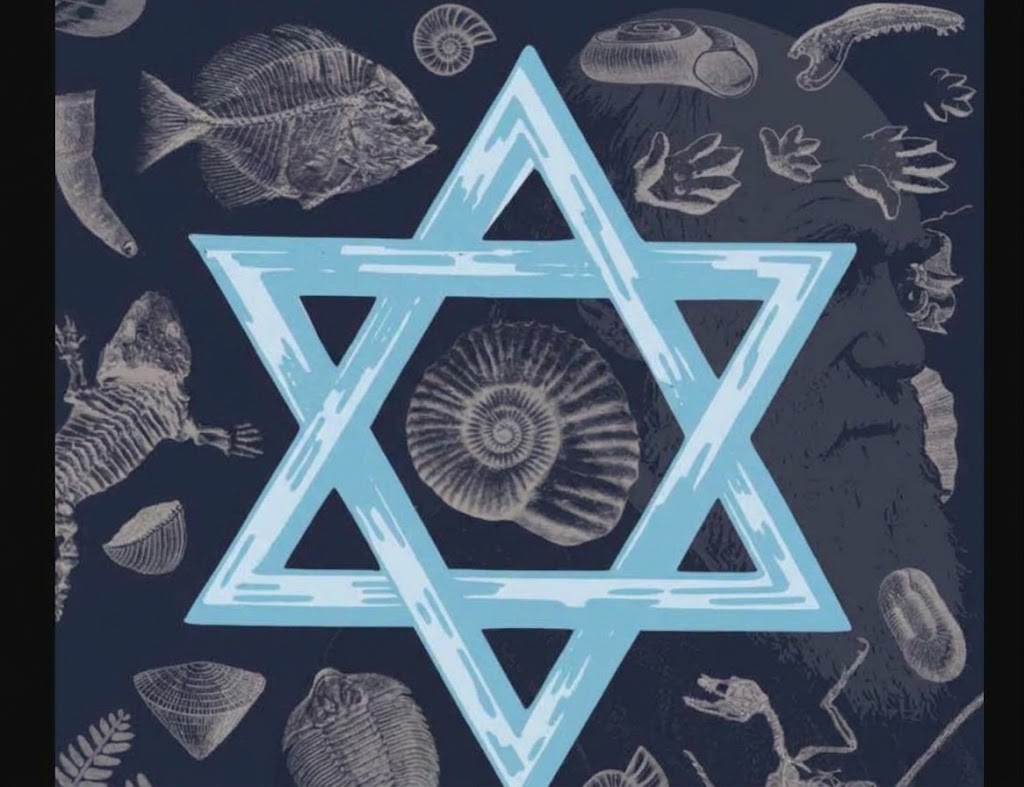
Helping Your Students Challenge Stereotypes about Scientists Through Wikipedia Jörg Matthias Determann   A historian at a university in Qatar seeks to expand knowledge about science and religion by asking his students to edit the free encyclopedia. A Meta-Wiki Page Header Image Designed by the Wikimedia Foundation for Wikipedia’s 25th Birthday   “Most scientists are atheists,” an undergraduate student of mine asserted toward the beginning of a history of science course I taught at Virginia Commonwealth University in Qatar in spring 2026. Intrigued, I wanted to find more about her sample. I asked her whether she thought that the scientists who were working on our own campus did not believe in God. She responded rather vaguely that she meant researchers “outside.” I quietly wondered how many physicists or

June 2026 Blog

Medicine as Religion? Benjamin R. Doolittle, MD, MDIV   Is the practice of medicine a religion?  I have been a physician for 29 years and a church pastor for 35.  I am struck by the similarities between my two vocations.  Both disciplines require tell-tale vestments. In the hospital, I wear a long white coat; in church, a long black robe.  In both, we enjoy poignant moments of gathering.  On Sunday mornings, we gather in church with a spirit of reverence to reflect, ponder, grow together as a community.  On Thursday mornings, for departmental grand rounds, our communal posture is no less reverent.  In this weekly lecture, the learned professor elucidates the community of the latest scientific advances.  In medicine, we even portray a devotion to sacred writ that

May 2026 Blog

The Boyle Lectures and the Brain: Concerns about ISSR’s Public Sphere Claims about Human Minds and Intelligence Michael Spezio, Ph.D., M.Div. Associate Professor, Psychology, Data Science, Neuroscience, Scripps College, Claremont, CA USA Minister of Word and Sacrament, Presbyterian Church (U.S.A.), Presbytery of San Gabriel, Temple City, CA USA The public sphere of pluralistic liberal democracy is in danger of collapse due to sustained attacks on sound, coherent, evidence-based discourse, thinking, and the corrigibility of claims. Anti-vaccine campaigns are reshaping public health. Anti-evolution advocacy is reshaping science education. Climate denial is reshaping energy policy. The institutions themselves are now being directed by commitments that contradict the scientific consensus they were built to apply. None of this is incidental to the work of science and religion. Our field exists, in

March 2026 Blog

Evolution and Eternity  Rupert Sheldrake   The twentieth-century revolution in cosmology threw science into a slow-moving crisis that is still unfolding. Before the Big Bang theory became orthodox after 1966, physicists used to think that they were studying an eternal universe, governed by timeless mathematical laws, consisting of a fixed amount of matter and energy that was preserved forever according to the principles of conservation of matter and energy. These fundamental realities of physics were not altered by anything that actually happened. The evolution of life on earth made no difference to them, nor would the extinction of all life on our planet. The laws of nature and the total amount of matter and energy would always be the same.   The idea that the universe was born

February 2026 Blog

India in the Science–Religion Conversation: Plurality, Tension, Promise Augustine Pamplany Director of the Institute of Science and Religion, Kochi, and Research Dean at the Xavier–Loyola Institute of Interdisciplinary Studies, Trivandrum, Kerala, India. Email: apamplany@iaiss.com   In 2006, Elon University (USA) and the Interdisciplinary University of Paris collaborated on a project titled Global Perspectives on Science and Spirituality (GPSS), supported by the John Templeton Foundation. The initiative arose from a recognition that science–religion dialogue had been largely shaped by Euro-American questions and frameworks. Its aim was to broaden this conversation by bringing in intellectual, philosophical, and spiritual resources from other cultural worlds, especially South Asia. A few scholars from India participated in this project to examine how the Indian tradition conceptualises nature, mind, and ultimate reality, and how these

January 2026 Blog

From Astrobiology to Astrotheology and Back   Ted Peters Center for Theology and the Natural Sciences ▓ “Cosmology is a voyage of the human spirit.” That’s what Harvard astronomer Owen Gingerich tells readers in the scientific journal, Nature (Gingerich 2009, 29). The space sciences, whether they do it voluntarily or not, captain us on a voyage of the human spirit. More. The divine spirit as well.   On the one hand, the astrotheologian reflects on what the astrobiologist learns about the cosmos. The science of astrobiology, as NASA defines it, is the study of the origin, evolution, and distribution of life in the universe. SETI astrobiologist Margaret Race specifies two divisions: the search for microbial life within our solar system and the search for intelligent life on exoplanets

December 2025 Blog

Is Scientific Inquiry an Intellectual Descendant of the Hebrews? Dru Johnson   Could the Christian Bible contain the conceptual seeds of scientific inquiry? It seems odd to ask such a question about a notoriously religious collection of texts. However, in the milieu of ancient Near Eastern (ANE) literature, the Hebrew texts stand out as distinctively rational with regards to creation. By this, I am not referring to the standard line that, because creation is ordered for the Hebrews, we can therefore study it empirically and predictively. That may be correct. Rather, their depictions of human knowers in these Hebrew texts distinguish themselves amongst their peer traditions, and resonate with scientific inquiry today.  Over seventy-five years ago, ANE scholars claimed that the Hebrew biblical literature uniquely contained a sustained

November 2025 Blog

Technodao and the Moral Grammar of AI Heup Young Kim Rethinking AI ethics from control to formation by aligning design with dignity through East Asian virtue and Christian humility. 1) From Control to Meaning Debates about artificial intelligence often circle around capability and control—who builds, who commands, who benefits. These are necessary questions. Yet underneath them lies something quieter and more decisive: What kind of beings are we becoming through our technologies? If ethics is only a set of rules applied after the fact, it will always trail the pace of innovation. What we need is not merely additional regulation but a renewed sense of moral grammar that shapes our practical reason, our imagination of the good, and our life together. Here, the philosopher Charles Taylor is a

October 2025 Blog

Spirituality, Religion, and Human Health: connecting the empirical and the profound at the intersection of science and religion Tobias Anker Stripp, Center for Science and Faith, University of Copenhagen   Even though the discourse of modern biomedical healthcare appears to render little attention to questions of spirituality or religion, the relationship between spirituality, religion and human health has always been intricate and entangled. Prior to our era, the priest and medical doctor occupied one role: the shaman. With universal tropes in all global theologies, exemplified by the story of the Good Samaritan, the spiritual life of humans has always been linked to health and care for the ill (Gill, 2006; Stripp, 2023). The field of “religion and health” has emerged from the fringes of academic discourse to become

Go to Top