May 2026 Blog

The Boyle Lectures and the Brain: Concerns about ISSR’s Public Sphere Claims about Human Minds and Intelligence Michael Spezio, Ph.D., M.Div. Associate Professor, Psychology, Data Science, Neuroscience, Scripps College, Claremont, CA USA Minister of Word and Sacrament, Presbyterian Church (U.S.A.), Presbytery of San Gabriel, Temple City, CA USA The public sphere of pluralistic liberal democracy is in danger of collapse due to sustained attacks on sound, coherent, evidence-based discourse, thinking, and the corrigibility of claims. Anti-vaccine campaigns are reshaping public health. Anti-evolution advocacy is reshaping science education. Climate denial is reshaping energy policy. The institutions themselves are now being directed by commitments that contradict the scientific consensus they were built to apply. None of this is incidental to the work of science and religion. Our field exists, in

March 2026 Blog

Evolution and Eternity  Rupert Sheldrake   The twentieth-century revolution in cosmology threw science into a slow-moving crisis that is still unfolding. Before the Big Bang theory became orthodox after 1966, physicists used to think that they were studying an eternal universe, governed by timeless mathematical laws, consisting of a fixed amount of matter and energy that was preserved forever according to the principles of conservation of matter and energy. These fundamental realities of physics were not altered by anything that actually happened. The evolution of life on earth made no difference to them, nor would the extinction of all life on our planet. The laws of nature and the total amount of matter and energy would always be the same.   The idea that the universe was born

January 2026 Blog

From Astrobiology to Astrotheology and Back   Ted Peters Center for Theology and the Natural Sciences ▓ “Cosmology is a voyage of the human spirit.” That’s what Harvard astronomer Owen Gingerich tells readers in the scientific journal, Nature (Gingerich 2009, 29). The space sciences, whether they do it voluntarily or not, captain us on a voyage of the human spirit. More. The divine spirit as well.   On the one hand, the astrotheologian reflects on what the astrobiologist learns about the cosmos. The science of astrobiology, as NASA defines it, is the study of the origin, evolution, and distribution of life in the universe. SETI astrobiologist Margaret Race specifies two divisions: the search for microbial life within our solar system and the search for intelligent life on exoplanets

Job Opportunity: Postdoctoral Researcher (Quantum Worldviews Project)

University of Oxford, Faculty of Theology and Religion   The Faculty of Theology and Religion is hiring a postdoctoral researcher for the Quantum Worldviews Project, to conduct research on the entanglements between quantum mechanics and religion in the twentieth- and twenty-first centuries. The appointee will work across several of the Project’s strands of research, focusing on historical and theological analysis of the emergence and evolution of quantum religion, but also contributing to social-scientific studies of contemporary quantum religion, and to constructive theological analysis of realist quantum interpretations. The role will also involve public engagement activities, especially in documentary and podcast work. It is expected that the appointee will author their own publications from research undertaken within the Project, contribute to some of the Project’s multi-authored outputs, attend and

By |2025-12-02T21:50:36+00:00December 2nd, 2025|Categories: Science & Religion News|Tags: , , , , , |

May 2025 Blog

Humanity, Our Microbiome, and Our Relationship with God Dr John F Pohl MD DThM   From a metaphysical perspective, advances in science are very helpful in expanding our definition and understanding of God.  The discovery of a vast and expanding universe aids in our realization that humans are just a tiny part of God’s wonderful creativity.  Ideas surrounding quantum indeterminacy suggest that the substratum of reality may indeed be random and, thus, have creative potential for nature.  Do such metaphysical considerations exist in the biological sciences?  Yes, when one considers the human microbiome and its effect on our species. The human microbiome is immense and consists of approximately 10¹³ microorganisms for which the majority of these tiny creatures exist within the human gastrointestinal (GI) tract.1,2 Although bacteria dominate the

January 2025 Blog

Who is Working on Science and Religion? Changes in the Last 20 Years Fraser Watts The field of science and religion looks very different now from how it looked when ISSR was founded in 2002. For one thing, there is less interest in harmonising science and religion, or in defending religious convictions against scientific objections. Instead, there is increasing interest in the converging contributions of science and religion to challenges in human flourishing, such as ecology and the environmental crisis, about which ISSR is holding a conference in the summer. This shift is also flagged up in the title of this year’s Boyle Lecture, to be given by Antje Jackelén, “Science, Technology, Theology and Spirituality – A Necessary Partnership”?   Many of us have become more sceptical about

July 2024 Blog

Science, religion, and health Lluis Oviedo, OFM Pontifical University Antonianum, Rome Studies on religion, health, wellbeing and flourishing have proliferated in recent years to the point of becoming unmanageable. Theologians are unsure what to make of this vast body of research. On the one hand, the results clearly point to a moderately positive effect of religion on these human dimensions; indeed, they arouse a certain renewed interest in religion and its function or utility. On the other hand, their methods (mostly empirical) and approach (typically pragmatic) surprise theology as something quite alien to its own tradition. A question worth exploring further is whether the sub-discipline of science and religion is better equipped and could provide a better framework for receiving and managing this research. After all, health sciences

By |2024-07-15T20:28:46+01:00July 15th, 2024|Categories: Blog|Tags: , , , , |

January 2023 Blog

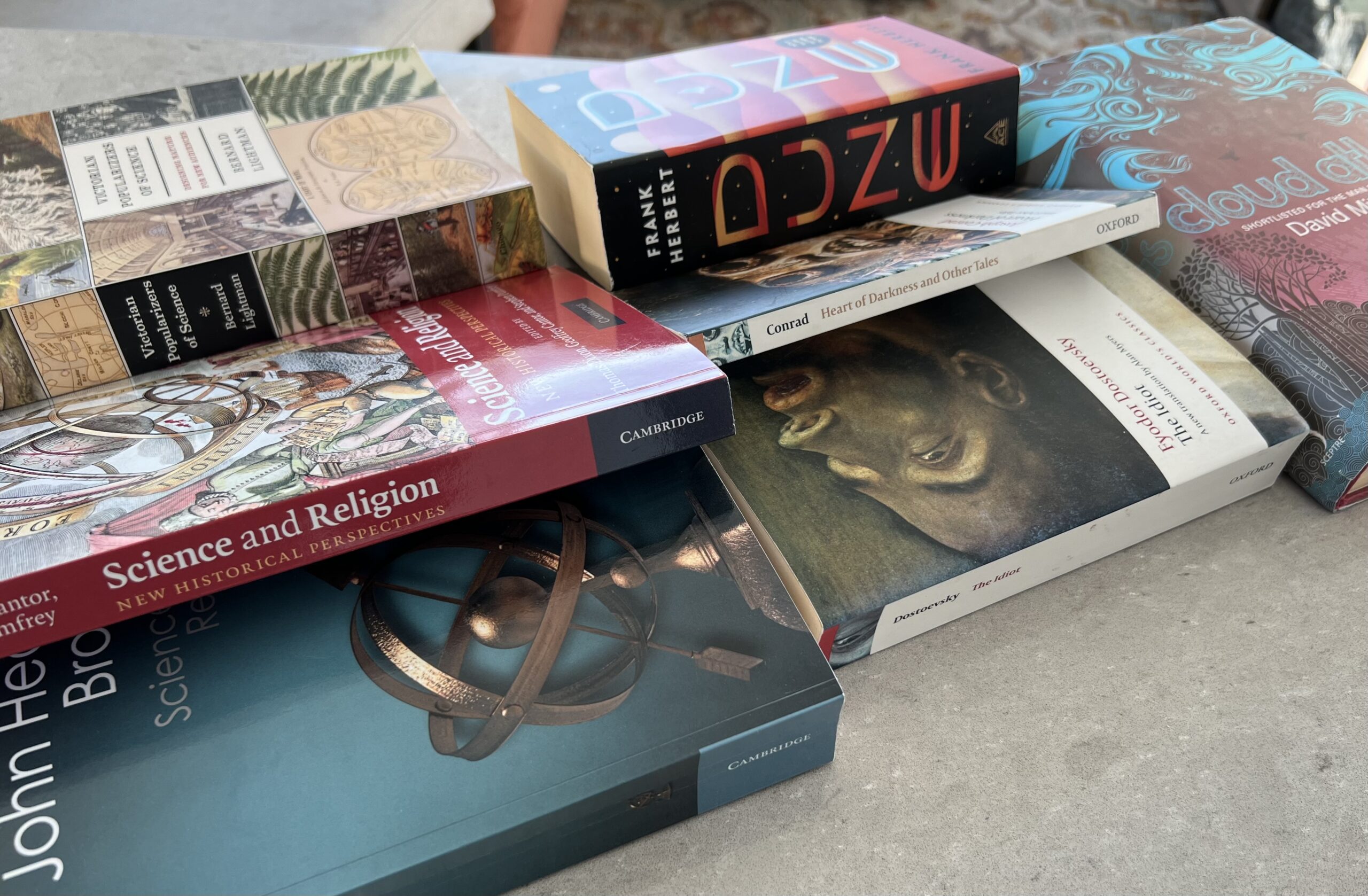
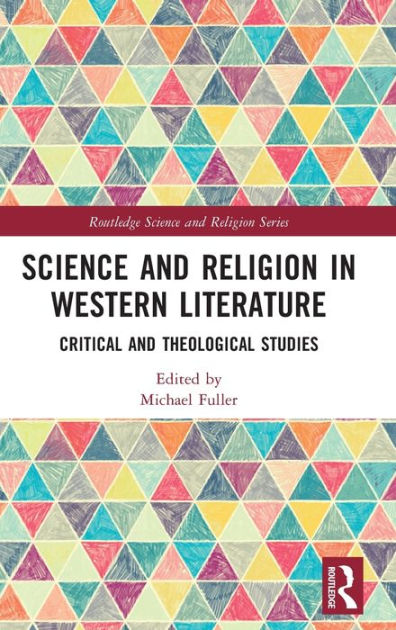
Science, Religion … and Literature by The Revd Canon Dr Michael Fuller   How do people engage with issues around science and religious belief? Readers of this blog will of course be familiar with the contours which the ‘science and religion debate’ have followed since Ian Barbour’s groundbreaking work in the 1960s: the search for philosophical, methodological and historical ‘bridges’ which might link these two areas of human activity, the focus on ‘hot topics’ like divine action and the mind-body problem, and so on. More recent developments have seen the extension of the field of science and religion studies to acknowledge non-Western religious traditions – and to acknowledge also the richly varied nature of the scientific enterprise. Science and religion are now rightly thought of as complex

December 2022 Blog

Wentzel van Huyssteen (1942-2022) in memoriam Niels Henrik Gregersen, University of Copenhagen   The prominent member of ISSR, J. Wentzel van Huyssteen, sadly died February 18 this year, a few months before his 80th birthday. At the 2022 Meeting of the American Academy of Religion in Denver, the ISSR arranged a session on “The Legacy of J Wentzel van Huyssteen: Commemoration and Critiques” on November 19 with panelists including Danie Veldsman, Nancy Howell, Kirk Wechter-McNelly, Andrew Rick-Miller, and myself.  The point of the session was to take stock of van Huyssteen’s work up from his early career to his mature work, epitomized in his Gifford Lectures, Alone in the World? From 2006. The session turned out to be moving by including also personal reflections from the panelists and

Go to Top