November 2022 Blog

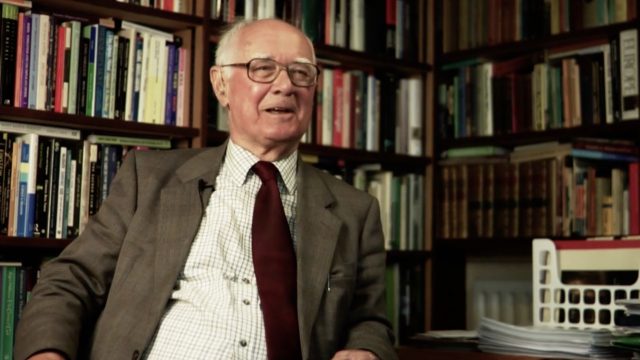
John Polkinghorne – a dear academic, theological and personal friend Michael Welker     In 1993 the Center of Theological Inquiry in Princeton, under the leadership of Dan Hardy, sponsored a four-year consultation in which an interdisciplinary group of scholars (including the fields of cosmology, physics, biology, chemistry, environmental studies, philosophy, religious studies and theology) moved from an exchange via different disciplinary and individual academic approaches to the dialogue between science and theology. This is where John Polkinghorne and I met and first became intellectual friends and then, in the course of several years, also personal friends.   Together we developed international and interdisciplinary consultations and conferences, cooperated in the publication of articles and books, and even wrote one book together. John received the prestigious Von Humboldt Research

October 2022 Blog

Understanding Spiritual Intelligence: A Progress Report on an ISSR Research Project   Fraser Watts We are just over two years into the ISSR research project on Understanding Spiritual Intelligence, funded by TWCF. I posted a blog at the start about what we intended to do. This is an update on where we have got to. We had to do quite a bit of hard conceptual work on what we mean by “spiritual intelligence”. We do not assume that there is a “God spot” in the brain, or a module for spiritual intelligence in the cognitive architecture. We assume that when humans are operating in spiritual mode, that they are using the same mental resources as they use for everything else. We also do not assume that spiritual intelligence is

April 2019 Blog Post: “The Problem of Evil, Divine Action, and Science” by Thomas Jay Oord

Greetings all,   It is my pleasure to share with you our latest blog. It has been some time since our last post, but my hope is to have one go live on the first Friday of each month. We have an exciting schedule of posts coming up, and as always we encourage you, our Fellows and Associates, to send in suggestions and drafts for review to be considered for new content. This months post (below) is by Thomas Jay Oord, and we are excited by the thought provoking questions it raises. This blog represents some of the thinking that went into Oord's newest book, God Can’t: How to Believe in God and Love after Tragedy, Abuse, and Other Evils (2019).    All best,   Anthony Nairn     The

By |2019-04-13T23:49:10+01:00April 6th, 2019|Categories: Blog|Tags: , , , |

What is Wisdom? Voices from Psychology and Christian Faith

Throughout history, one tends to find at least two categorically different ways in which wisdom is understood. These might be described as a wisdom of knowing, and a wisdom of unknowing.   In Christian terms, we might call these a cataphatic wisdom, and an apophatic wisdom. A cataphatic wisdom relies on knowledge, texts, and accumulated wisdom – what is known and declared to be known. An apophatic wisdom, which recognises what one cannot know, relies on a direct and open kind of awareness. This is what John of the Cross called “the dark night of the soul”, where one leaves one’s knowing behind and plunges into the darkness of the ineffable. The former wisdom relies on longstanding traditions of meaning and knowledge – it represents a tried and

By |2017-06-12T14:19:05+01:00June 12th, 2017|Categories: Blog|Tags: , , , |

Go to Top