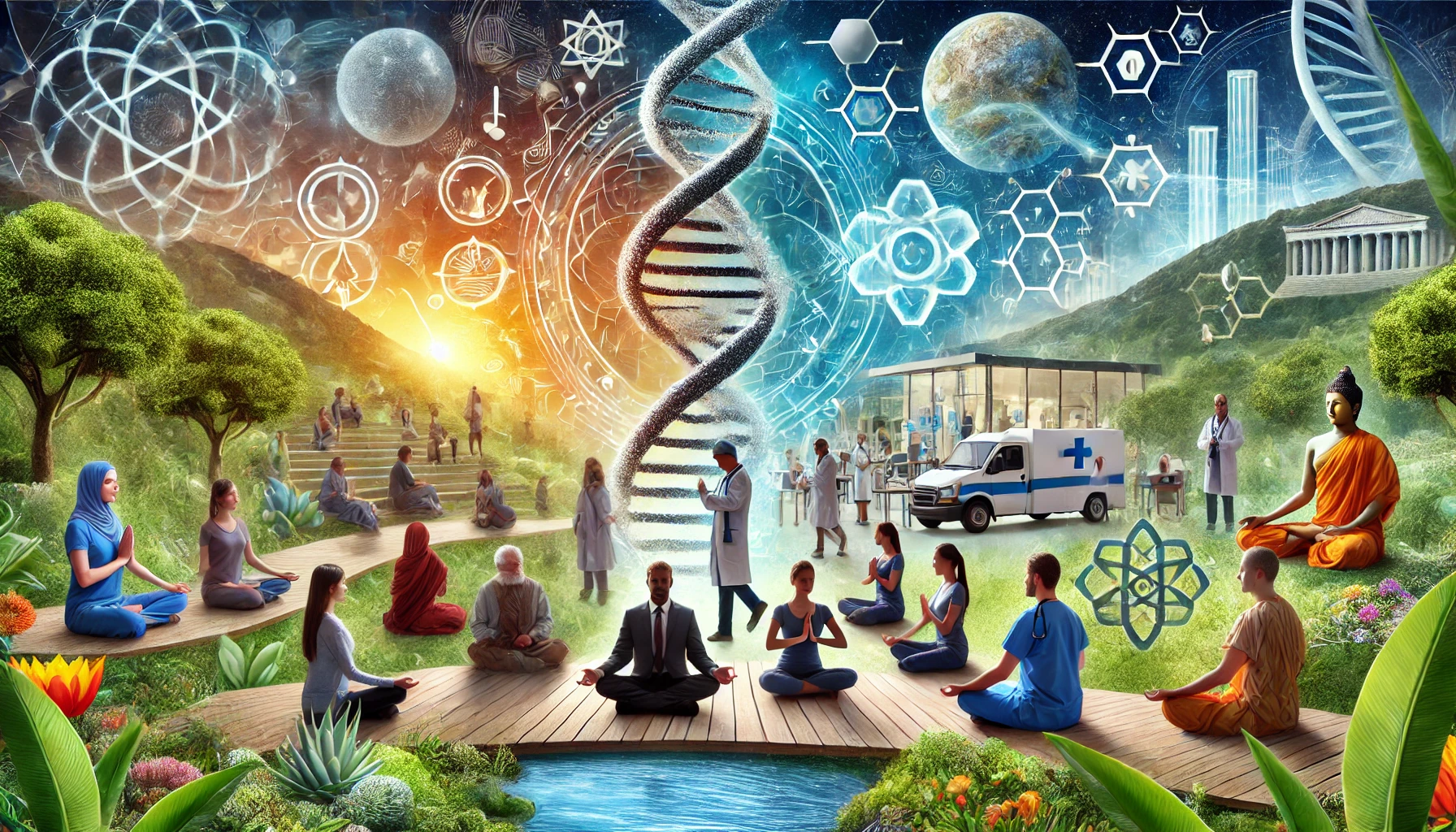
Science, religion, and health
Lluis Oviedo, OFM Pontifical University Antonianum, Rome
Studies on religion, health, wellbeing and flourishing have proliferated in recent years to the point of becoming unmanageable. Theologians are unsure what to make of this vast body of research. On the one hand, the results clearly point to a moderately positive effect of religion on these human dimensions; indeed, they arouse a certain renewed interest in religion and its function or utility. On the other hand, their methods (mostly empirical) and approach (typically pragmatic) surprise theology as something quite alien to its own tradition. A question worth exploring further is whether the sub-discipline of science and religion is better equipped and could provide a better framework for receiving and managing this research. After all, health sciences are a well-established scientific field, and nobody doubts the quality of their epistemic and methodological status as science. However, to my knowledge, theologians engaged in dialogue with science have paid very little attention to such developments, perhaps because they have focused more on other natural sciences (physics, biology, neuroscience…) and have simply neglected the health sciences as more derivative or secondary, even though their social impact is certainly much greater. Iy is time to show the interesting role that health sciences can play in this dialogue with theology, pointing to new forms of convergence and conjunction between the two disciplines, and to a rich interaction that can help to overcome former tensions and prejudices. Health sciences are now coming to the rescue of religion and of a more engaged theology “from below”, or a “lived theology”.
To the issue what health sciences have been mostly neglected in the interaction between science, religion and theology, a possible answer is that those are less “pure sciences” and more “applied sciences”, like engineering, and so they would qualify less as interlocutors for theology. In many cases, such endeavours could be seen as “too practical” and derived from core sciences.
This discussion introduces us to the complexity of the research I am proposing; the extent to which the interaction between health sciences and religion requalifies and invites us to rethink the programme of the well-established sub-discipline of science and theology. Those, like myself, who have been involved in this interaction for more than 20 years may find this inclusion somewhat strange. The standard approach has been to relate theology to hard sciences such as physics, biology and neuroscience, and to try to discern their implications, challenges and reception in our theological traditions. I pushed to include scientific anthropologies and the new scientific study of religion in the list of concerned disciplines that could be involved in this dialogue. In both cases we could find applications of biological or evolutionary and cognitive studies in attempts to better understand human and religious behaviour. Possible additions or concerns include technology as another unavoidable factor, especially after the rise of artificial intelligence. However, medicine or health sciences have usually been neglected in the list of interlocutors worthy of theological attention. Some exceptions can be found exploring the ATLA database, but most entries have an ethical or a historical focus.
We can assume that the health sciences have developed enormously in recent decades, combining hard sciences such as genetics, molecular biology and neuroscience, the latest technological advances such as AI, and very transdisciplinary and holistic models that try to better deal with their particular subject. In any case, this complex and multidisciplinary or transdisciplinary status that we recognise for medicine and health sciences could become an interesting case for theology and its efforts to be an academic partner of hard or natural sciences, and at the same time to practice with applied sciences and with sciences that try to have a holistic or organic approach. Certainly, theology will not help to solve the puzzle of the epistemic status of this field, but it can develop its own approach and a rich interaction with this very dynamic and growing field.
There is an important factor that motivates the proposed engagement with the health sciences. Every year many new studies are published that clearly point to the positive role that religion plays in health and healing processes. If we look at the extensive and open access database for health studies, PubMed, and search in its browser window for “religious coping”; “religion and resilience”; “religion and healing”, we will find hundreds of entries, and the graphs showing the number of new entries each year are growing steadily and reaching record levels in the years following the COVID pandemic.
What might all this research mean for us? There is a growing body of evidence about the positive effects of religion on health, particularly mental health. Scientists such as Harold Koening have published remarkable books on this area of his expertise. He insists that in order to develop a good approach to this issue, we need to look for evidence-based studies, or good scientific methods.
What can theology learn from this constant flow of mostly empirical studies? It is clear that theologians often dislike empirical research, and that these studies might smack of an excess of pragmatism or a utilitarian style that could be detrimental to a good understanding of the Christian faith and its message of love and grace. But that is only one side of the story. The other side is that they can offer a more concrete and explicit content to the Christian message of salvation, the idea of healing grace, and could strengthen the case for a more credible religious proposal.
The benefits for the dialogue between religion, science and theology are also obvious. For example, the ongoing research simply shows that religious beliefs and practices can bring something positive to the constant struggle for health and a better life, thus helping to bring more symmetry to this relationship in which it has been customary for religion to learn from science. This inclusion can change the rules of that game, to pay more attention – from a scientific perspective – to what religion and theology mean and their positive role.