August 2025 Blog

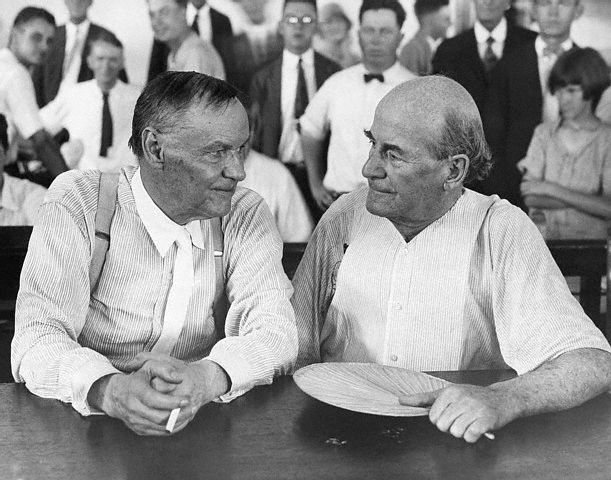
What the Scopes Trial Meant: Bryan, the Modernists, and Science Edward B. Davis, Professor Emeritus of the History of Science, Messiah University (Reposted with permission from BioLogos.)   This July marks the one hundredth anniversary of the most famous event in the history of American religion and science, the trial of John Scopes for teaching evolution in a rural Tennessee high school. The rookie teacher was convicted of violating a new state law prohibiting public schools “to teach any theory that denies the story of the Divine Creation of man as taught in the Bible, and to teach instead that man had descended from a lower order of animal.” Ironically, both the prosecution and the defense wanted a conviction. Responding to a solicitation from the American Civil Liberties

By |2025-08-15T19:53:39+01:00August 15th, 2025|Categories: Blog|

July 2025 Blog

ISSR 2025 Conference Report Tim Middleton (University of Oxford) and Fraser Watts   The ISSR’s 2025 conference was hosted at Stanton House Hotel in the Wiltshire countryside, from 30 June to 3 July. The surrounding parkland—complete with lake, woodland, and fields of sheep—proved a fitting setting for the ISSR’s new focus on ecological concerns. The conference itself—entitled ‘Ecology between Religions and Sciences: Minds and Bodies in Nature’—included seven keynote lectures, two interfaith symposia, and several short paper sessions. Mike Hulme (University of Cambridge) opened the conference with a lecture on ‘Climate, Ecological, and Social Crises—Scientific and Religious Perspectives’, offering an overview of interactions between religion and ecology. Hulme noted how religion is often absent from conversations about climate change. But he argued that religions are of the utmost

By |2025-07-15T18:26:15+01:00July 15th, 2025|Categories: Blog|

June 2025 Blog

WHAT IS “SPIRITUAL” IN SPIRITUAL PRACTICE? - THE EMPIRICAL QUESTION OF MEASURING WELLBEING EFFECTS PRODUCED BY SPIRITUAL PRACTICES. Harris Wiseman   A vast amount of research suggests that spiritual practices offer a range of health and wellbeing benefits. For example, a recent systematic overview of the spiritual practices and wellbeing literature (Koburtay et al. 2022) observed that, in the workplace at least, “belongingness, connectedness, virtuous-ness, deeper meanings of existence, and self-reflexivity are important for enhancing workers' psychological wellbeing” (pgs. 349-350), as are “prayer and reciting scripts” and the availability of spaces which allow or facilitate them (ibid.). Likewise, there is an emphasis on the moral values involved in relating spiritual practices to wellbeing. Values like “benevolence, integrity, justice, mutuality, respect, and trust are important” (ibid.) for enhancing wellbeing.

By |2025-06-15T20:48:09+01:00June 15th, 2025|Categories: Blog|

May 2025 Blog

Humanity, Our Microbiome, and Our Relationship with God Dr John F Pohl MD DThM   From a metaphysical perspective, advances in science are very helpful in expanding our definition and understanding of God.  The discovery of a vast and expanding universe aids in our realization that humans are just a tiny part of God’s wonderful creativity.  Ideas surrounding quantum indeterminacy suggest that the substratum of reality may indeed be random and, thus, have creative potential for nature.  Do such metaphysical considerations exist in the biological sciences?  Yes, when one considers the human microbiome and its effect on our species. The human microbiome is immense and consists of approximately 10¹³ microorganisms for which the majority of these tiny creatures exist within the human gastrointestinal (GI) tract.1,2 Although bacteria dominate the

April 2025 Blog

International Symposium on Developments in Artificial Intelligence & Humanoid Technology by Job Kozhamthadam   Recent developments in Artificial Intelligence (AI), accompanied by humanoid technology, are arguably the greatest achievement of human ingenuity to date. Thanks to these breath-taking breakthroughs, the claim is made that it is only a matter of time when human scientific prowess will have produced in its laboratory not only living beings, including humans, but also superhumans or posthumans. Recent amazing achievements like the humanoid Sophia, which was awarded Saudi citizenship in 2017, the humanoid Ameca, the world’s most advanced robot so far, the Chinese humanoid SEO1 with its ability to have a natural, human-like gait, and many others – each with its own specialties – seem to assure us that contemporary science’s claim is

By |2025-04-16T23:12:48+01:00April 15th, 2025|Categories: Blog|Tags: , , , , , |

Holmes Rolston III: In Memoriam Ted Peters   Planet Earth will miss its renowned paladin, Holmes Rolston III (1932-2025). He died on February 12 this year. Holmes was an academic champion of environmental ethics and public policy who influenced philosophers, theologians, scientists, and the wider public.   A New Environmental Ethics   Like a biblical prophet, Holmes announces the coming of a day of judgment. “The worry for the next century is that humans may destroy their planet and themselves with it,” writes Holmes in the second edition of his A New Environmental Ethics (Rolston III, A New Environmental Ethics 2nd ed, 2020, 245). This is Holmes’ prophetic judgment: we Homo sapiens on Planet Earth are risking the destruction of our home. Unless, of course, we repent.  

By |2025-03-16T05:02:25+00:00March 16th, 2025|Categories: Blog|Tags: , , , , |

February 2025 Blog

Science and Judaism: Where has the dialogue got to? Daniel Langton    One’s imagination goes off in all sorts of directions when one thinks of Science and Judaism. There is the phenomenon of the contribution of Jewish scientists to modern science and its understanding, such as those of Freud, Franklin, Einstein, Bohr, Feynman, Sagan, and Gould. There is the fascinating question of how an ancient religio-legal system, the halakhah, has been applied to science, from medical ethics to technological solutions for work prohibitions on Shabbat. There is the spooky realm of kabbalah and quantum mysticism, and the spookier story still of the precursor of the morality tale of Frankenstein, the monstrous golem. There is the tragic history of the murderous application of race science during the Nazi genocide.

By |2025-02-15T18:49:36+00:00February 15th, 2025|Categories: Blog|Tags: , , , , , , , , |

January 2025 Blog

Who is Working on Science and Religion? Changes in the Last 20 Years Fraser Watts The field of science and religion looks very different now from how it looked when ISSR was founded in 2002. For one thing, there is less interest in harmonising science and religion, or in defending religious convictions against scientific objections. Instead, there is increasing interest in the converging contributions of science and religion to challenges in human flourishing, such as ecology and the environmental crisis, about which ISSR is holding a conference in the summer. This shift is also flagged up in the title of this year’s Boyle Lecture, to be given by Antje Jackelén, “Science, Technology, Theology and Spirituality – A Necessary Partnership”?   Many of us have become more sceptical about

November 2024 Blog

Michael Ruse (1940-2024) by Michael Reiss   With the death of Michael Ruse on 1 November, the field of philosophy of science has lost both an intellectual giant and perhaps its most engaging member.   Michael was born near the beginning of the Second World War, on 21 June 1940, in England and brought up in a Quaker environment. His father was a conscientious objector, which wasn’t easy at the time, and his mother died when Michael was 13, which he unsurprisingly found very tough. Michael attended Bootham School in York, a Quaker school, and then went to the University of Bristol to read philosophy and mathematics. There, he had something of an epiphany when first hearing about Descartes’ Meditations in a lecture. I can remember him telling

By |2024-11-15T19:31:42+00:00November 15th, 2024|Categories: Blog|Tags: , , , , , , , |

October 2024 Blog

Can the DNA of ISSR Be Changed? Muzaffar Iqbal President of the Center for Islamic Sciences   Preamble The contemporary “Science and Religion” discourse is historically rooted in the redefinition of “science” and “religion” that took place in Europe under the complex kinetic forces arising out of the Scientific Revolution, the Protestant Reformation, and—more importantly—through introduction of a radical new concept of the cosmos and Insān, which is the gender-neutral Arabic word for a human being. This redefinition was the result of an ugly divorce that continues to create binaries (see below).  The SR-Discourse has gone through distinct phases over the last three centuries, but its anatomy has always remained fixed within the broad spectrum of this relationship conceived as two entities in the equation which are either

By |2024-10-15T22:52:37+01:00October 15th, 2024|Categories: Blog|Tags: , , , , , , |

Go to Top