The Brain Opioid Theory of Social Attachment (BOTSA):
How Religious Rituals Bond Groups of People Together
Leon Turner
The Brain Opioid Theory of Social Attachment (BOTSA) is based upon the strong behavioural and emotional similarities exhibited by those involved in intense, close relationships and those addicted to narcotics. According to BOTSA, social bonding in mammals is underpinned by a crucial psychopharmacological mechanism – The Endorphin System.
While they all have their origin in the brain’s pain control mechanisms, endogenous opioids are involved in a wide range of physiological, behavioural and neurobiological systems including consummatory reward, addiction, sexual activity, mental illness, affective states, memory and learning, digestion, parturition, respiration, appetite and thirst, renal function, temperature regulation, metabolism, immunity and cardiovascular regulation.
Endorphins are experienced as a mild opiate ‘high’ associated with light analgesia. β-endorphin, the most potent endogenous opioid peptide, is implicated in the regulation of physical and emotional stress and pain. It also plays a key role in social bonding. Elevated levels of β-endorphin have repeatedly been shown to be correlated with feelings of social warmth and closeness to others.
The role of the endorphin system in social bonding has been extensively studied in primates, where it has been used to explain the social function of grooming. Gentle stroking of the skin is an extremely efficient way to stimulate the endorphin system, and thus to bond pairs, or even small groups of individuals. The mild analgaesic effects of endorphins are supposed to create a ‘psychopharmacological environment of trust’ between groomer and groomed. Alliances are formed and cooperation is encouraged.
The evolutionary implications of these behaviours are enormous. Some believe that they are the key to understanding primate sociality. But physical grooming is not possible on a large scale. So, if endorphins are involved in bonding larger groups of people, some other mechanism must be at employed. It is well known that all forms of energetic physical activity result in increased endorphin production – the ‘runner’s high’. Recent research suggests that energetic activities performed in synchrony stimulate the endorphin system to an even greater extent than the performance of the same activities in isolation.
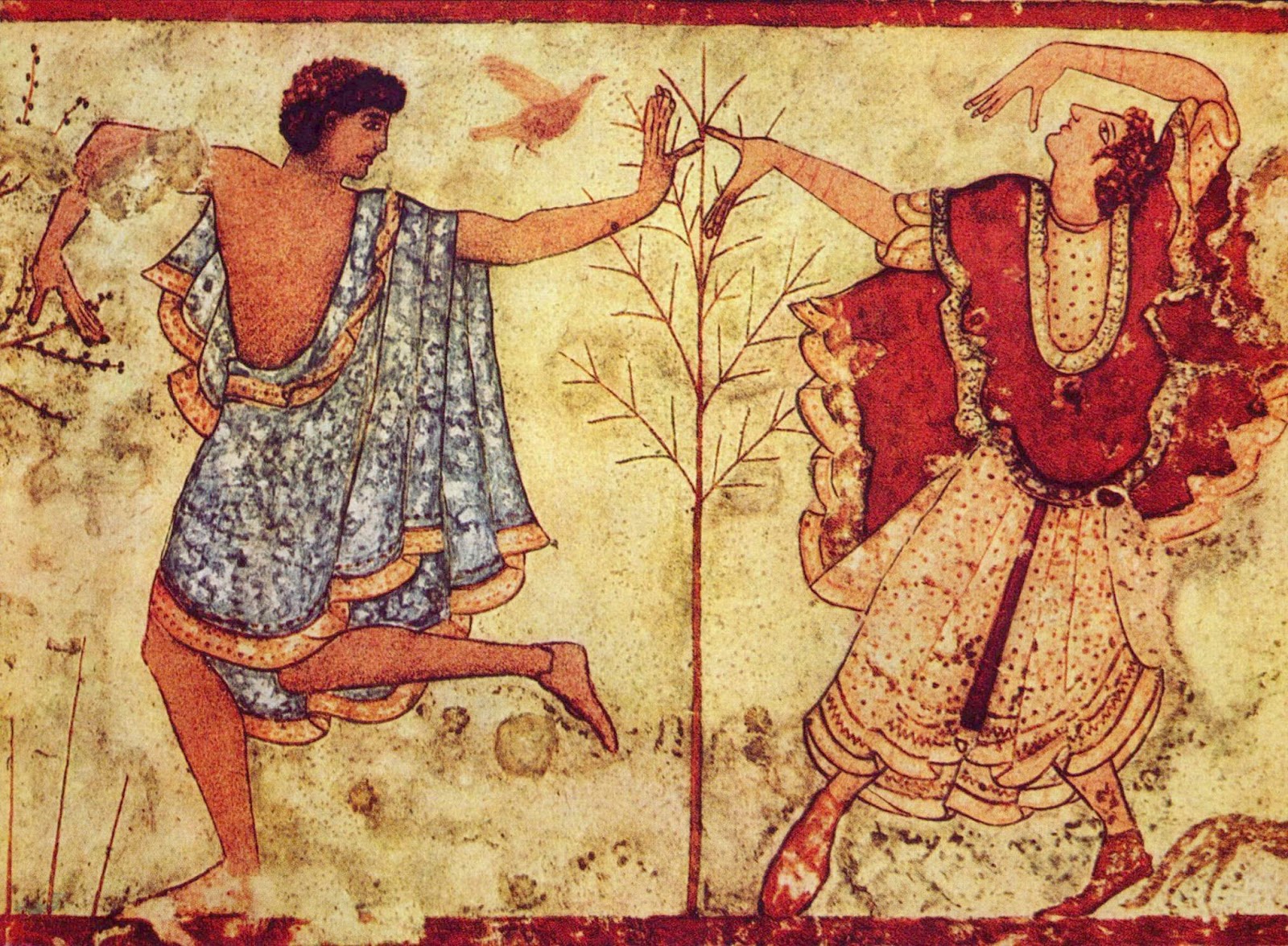
Synchronised dancing, singing, music production, chanting, and even synchronised finger tapping have all been shown to elevate endorphin levels. These activities have also been shown to facilitate social bonding amongst the individuals involved. People singing in choirs, dancing in synchrony, and drumming rhythmically, all report increased feelings of warmth and bondedness to the others of the group. This has led some (notably, Robin Dunbar and colleagues) to suggest that these activities have important evolutionary implications. In his book Human Evolution, Dunbar argues that these activities are effectively proxies for social grooming. Some of them are much older than the earliest evidence of supernatural beliefs, and may even predate language.
They are much more efficient than physical grooming, and free up time for other essential activities.
Importantly, this approach is almost unique in the way that it focuses upon the importance of feelings of bondedness rather than cognitive mechanisms. The emotional trust established between individuals by grooming and proxies for grooming provides solid foundations for future relationships, which enable the sort of coordinated action (one aspect of which may sometimes be cooperation) that give groups significant survival and competitive advantages. Religious rituals incorporate synchrony in various forms, including dancing, singing, chanting and rhythmic music production. Experimental evidence is slowly accumulating, but it is inconceivable that synchronised religious rituals do not elevate endorphin levels and facilitate social bonding.
A BOTSA-centred approach offers a novel account of how religion facilitates social bonding. It helps explain why religious rituals take the forms they do, and allows us to make certain predictions about what we will find in the archaeological record. Crucially, it explains how religion is likely to have played an important role in expanding the sizes of human communities. Those communities that practised these rituals could grow larger, and still remain stable, than those groups that did not.
This approach has several advantages over other approaches:
(1) It supposes an evolutionary continuity between primate and human bonding.
(2) It explains ritual’s role in social bonding before beliefs in gods and spirits.
(3) It explains how religion controls free-riders.
(4) It explains how religion helps with other difficulties of group living.
So far, we haven’t addressed the critically important problem of where religion comes from? What are its ultimate origins? The consensus is that religion begins with the emergence of beliefs in gods and spirits as a result of evolved cognitive predispositions towards interpreting the environment in terms of supernatural agentic activity. But an evolutionary approach to religion based on the role of the endorphin system in social bonding allows us to tell a different story.
We have seen that synchronised movement, singing, chanting etc. stimulates endorphin production and facilitates social bonding. But this happens in the total absence of religion. Where does the religious aspect of synchronised religious rituals come from? How did that evolve? We believe the answer most likely has something to do with the ecstatic states, or altered states of consciousness, that result from trance dancing.
We know that trance states, or ecstatic states, achieved through vigorous dancing are associated with highly elevated levels of endorphins. It may even be the case that trance states are actually triggered by extreme levels of endorphins. We also have reason to believe that people were dancing together long before the earliest evidence of supernatural beliefs. Possibly, early concepts of supernatural agents and spirits arise from trance states, which appear to have certain almost universal characteristics including encounters with ancestor spirits and totemic animals, spirit guides, and spirit journeys back to the conscious world.
The idea that religious beliefs might have their origins in ecstatic states is not new, but it is only very recently that research has begun to link the endorphin system, trance dancing, and social bonding together in an evolutionary narrative. But this still doesn’t explain the origins of religion itself in evolutionary terms. It just pointed out that religious beliefs may arise from certain evolutionarily adaptive behaviours.
So, is religion some sort of byproduct, or does it have adaptive value? Are religious rituals especially effective at bonding groups together? There is no need to say that religion is a byproduct or an adaptation. There is no reason why religion should have a single source. The BOTSA approach revises rather than entirely reinvents the evolution of religion.