by Berry Billingsley
Education ministers in England, Wales and Northern Ireland have reversed their decision to use an algorithm to adjust teacher predicted grades for both A level and GCSE. Leaving the last word to an algorithm demonstrates the problem with applying rules and models backwards – to “predict” individual cases. If the regulation body, Ofqual had created some persona characters to imagine individuals opening their results they might have discovered ahead of time, some of the consequences that then became real people and have dominated in the news.
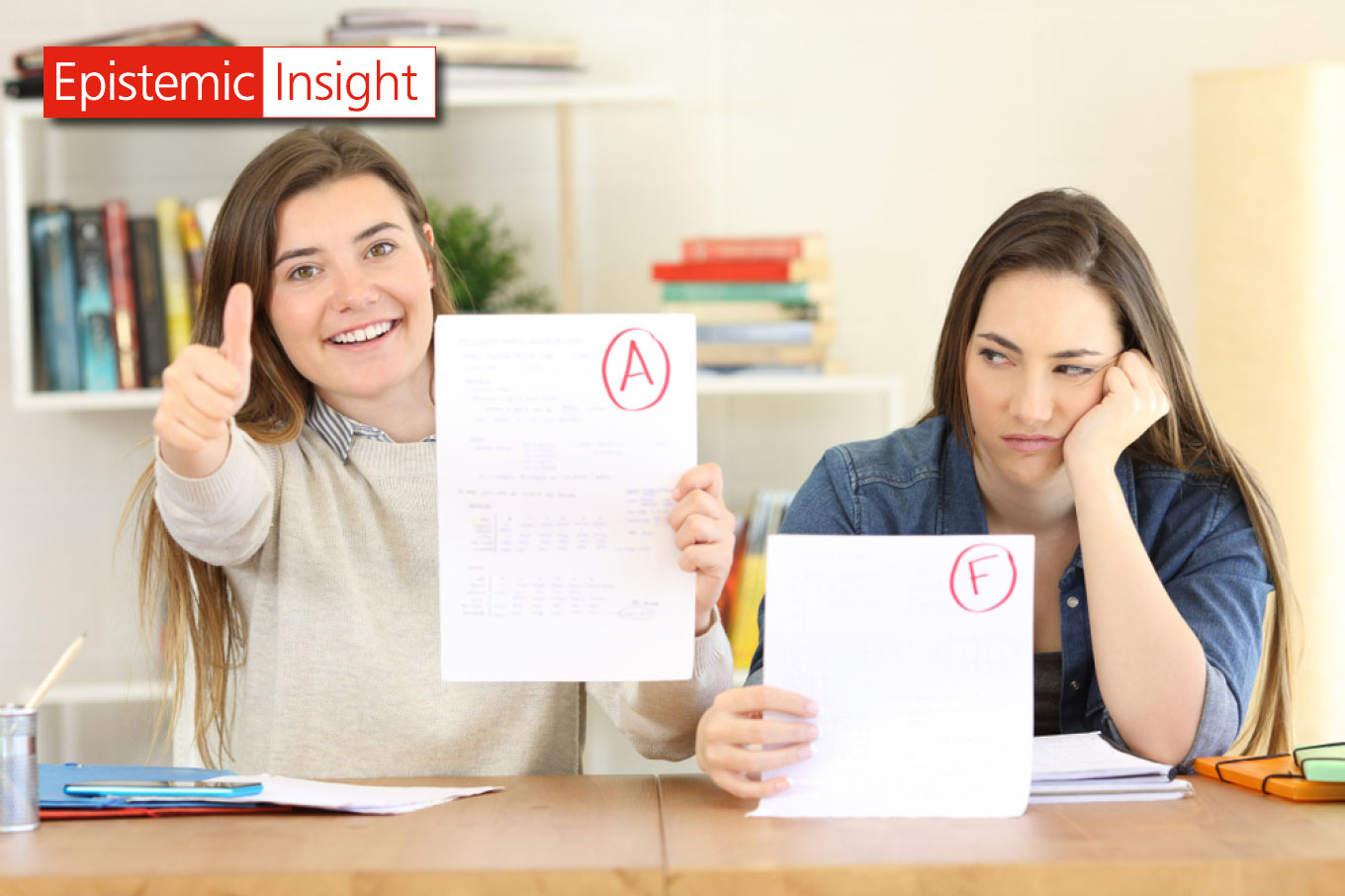
Across the nation each year when exams work as they should, some people fail but how will any student feel about being awarded a fail for an exam that they couldn’t sit? The historian Edward Gibbon has said of the laws of probability, that while they are true in general, they are fallacious in the particular (Bonnard, 1969). Seeing all of those “U” grades that the system was about to award should have triggered the thought that this is out of step with the spirit of an exam. Similarly, the human imagination could surely have conjured up ahead of time the scenario of a student who is a one-off ‘bright spark’ in a school that doesn’t usually do well – and anticipated how that student would feel about losing their top grade on the basis of the school’s performance in previous years. Human dignity and human agency are closely intertwined – and the exam system that we have tells students that on the day it is just them and the exam paper. When we saw students being interviewed by journalists – we could see their frustration at receiving a decision that had been made ‘about them’.
What went wrong and how do we fix it for next time? Thinking of this as a problem for science and modelling – we can sketch out an answer that means that we maintain a good flow of students through the grading funnels of A levels and direct suitably sized groups of students into the various ranks of universities that are ready and waiting for this year’s cohort to begin. Perfect. Well no, not perfect of course. Looking at this as a problem that needs a macroscopic solution, we have reduced the UK’s children to inanimate objects because we have required that they fit a pattern that produces the right answer for the universities without thinking about what that journey will feel like to each of them. This year we tried to find a solution for a unique situation – an unprecedented situation – to use that oft used word! But the lesson we have learnt applies far more widely than this current situation.
There is no replacement today for human insight, no machine that can put itself into our shoes to feel with us how we will feel when we experience opening the envelope on results day. That is why we can’t expect to use past data to manage young people’s lives. Can there ever be an algorithm – or actually – a system – which combines rationality and compassion? When we understand the world compassionately, we see it in terms of stories. We have insight into our own and each other’s personal realities because we can make connections and give those connections meaning. Insight is also imagination, overcoming the gap of unfamiliarity to feel for someone else even where we do not know all the details. It is the wide range of experiences we each have of life that enable us to do this. We are better when we support our decision making with good data and with efficient machines for managing data. Compassion, a conscience and a sense of responsibility – for the time being at least – these are human characteristics. So – can there ever be a system to make these kinds of complex decisions. Yes – but it recognises the limitations of technology as well as its relevance and strengths.
As a specialist in how schools manage questions that bridge science, religion and the wider humanities, there are further questions to consider beyond the immediate and significant issues generated by this year’s results. I’ve hinted here already at something I am calling ‘insight’ – and I’ve said it’s uniquely human because it requires us to draw on the experiences we each have of our experiences of being a person.
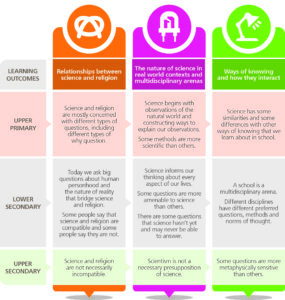
The research carried out by our team has provided a curriculum framework for one aspect of insight – namely, epistemic insight – which is the capacity to be insightful about the strengths and weaknesses of science and other disciplines to address different sorts of questions. We have developed and tested a curriculum for schools which sets out what epistemic insight looks like and also how to develop this kind of critical thinking with students.
This includes comparing the precision of a carefully framed science question in physics for example, with the breadth and depth of variation that is encountered in a real-world context. In the lab we go to great lengths to control nature but in the real world history tells us that nature is full of surprises and engineers can tell endless tales of people doing something they weren’t expecting with a gadget designed to be used in a particular way.
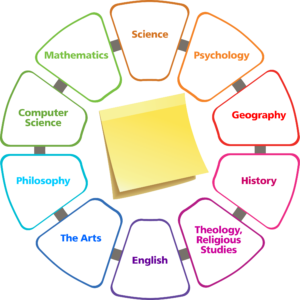
During the course of this pandemic, Parliamentarians in England have provided us with a series of ‘textbook’ case studies for why we need to be teaching epistemic insight in schools. So for example, a young person who is epistemically insightful about the strengths and limitations of science would be able to apply this understanding to be critical of political speeches in the early days of the pandemic that presented science as a one-stop shop for answers when faced with difficult decisions. As time has passed, this rhetoric has given way to a greater acknowledgement that decisions are not made on the basis of science alone. Consider for example whether to require people to socially distance in shops by 2 metres or 1 metre. While a greater separation can reduce the number of infections, this must be considered alongside the impacts on the retail revenue of shops. As the Deputy Chief Medical Officer for the UK Jonathan Van-Tam put it during a press conference, decisions are a combination of ‘science, politics and practicality’ (quoted in Neilan 2020). These two examples illustrate two categories of epistemic insight in the framework – thinking critically about the strengths and limitations of science in the real world, secondly, thinking critically about how science compares with other disciplines studied in school. Tools like the Discipline Wheel (below) are among the resources we offer to support these discussions.
The third category is to teach students to think critically about Big Questions that bridge science and religion. In the Epistemic Curriculum Framework, we say that these are questions about human personhood and the nature of reality. We have seen many opportunities to discuss case studies in this category during this pandemic. An example would be the need to respect the dignity of a person who finds they need to self-isolate and to treat others as we would like to be treated ourselves. Also respecting how different we each are in our goals and aspirations; There is a discussion that some students might want to have on the extent to which we ask a moral question when we decide whether or not to send children to school.
Can thinking like a theologian about Big Questions raised by this pandemic give us any new insights that we can’t anyway gain by common sense and by looking at advice from organisations like the Department for Education and the World Health Organisation? A theological perspective on nature can arguably go further by telling us to be wary of metaphors like “We are at war with this virus”. Studying nature through the lens of theology has inspired many scientists among others to say that this is not a natural world that is “out to get us.” Instead it is a world in which we are equipped with ways and means to learn about the mechanisms of nature and to find ways to make lives better (or worse) for ourselves, our neighbours and those who are further from us.