
Greetings all,
First, I have to apologize for the time-gap between our last blog post and this one. We were having website difficulties that were preventing us from doing the work necessary to accomplish basic tasks, however, thanks to our IT team we have now updated and fixed many of the problems that some of you (and myself!) have faced on the website. If you come across any difficulties moving forward, please email me (admin@issr.org.uk) and let me know. We will do our best moving forward to maintain the websites smooth operations.
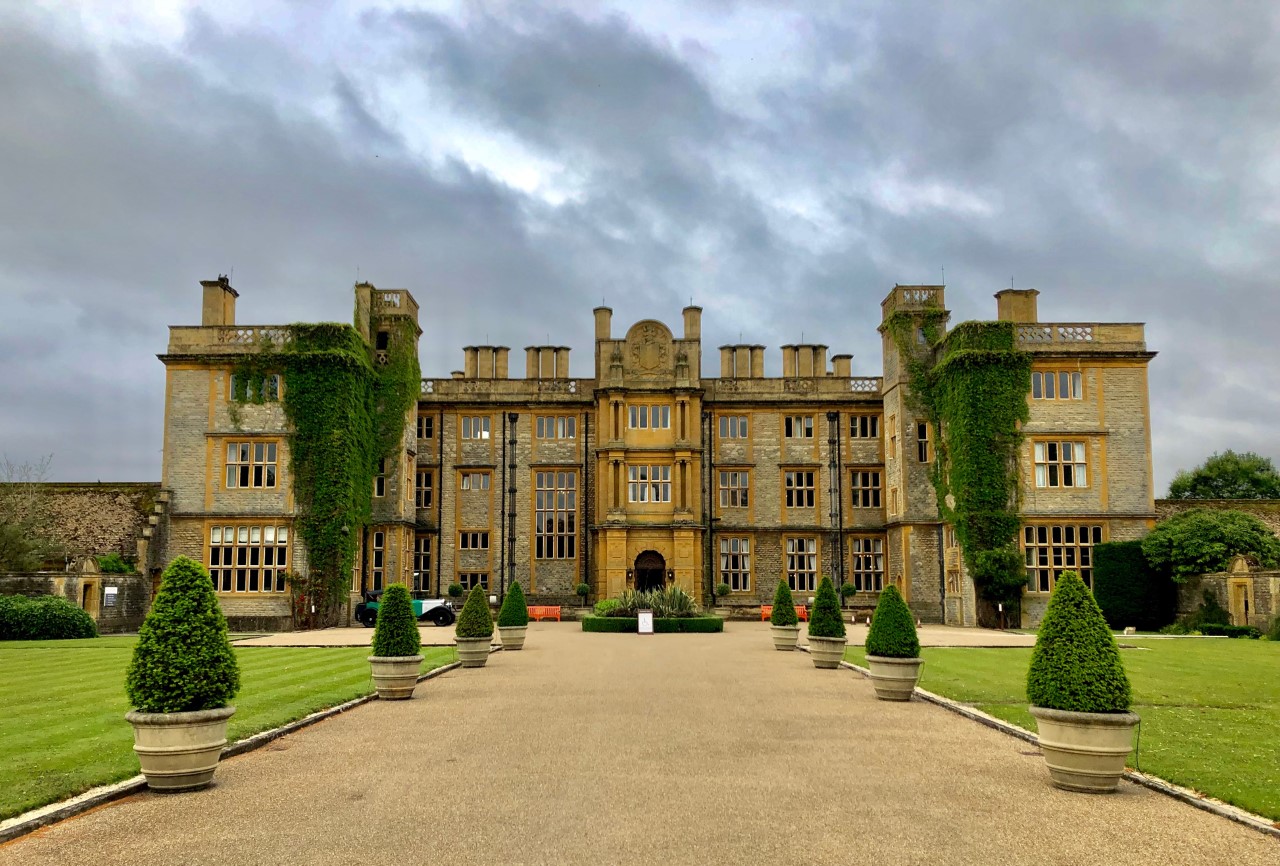
This month is a reflection of our very successful Summer Conference which occurred near the end of July at Eynsham Hall Hotel outside Oxford. Personally, I had a wonderful time and learned many new things—what you want from a conference! More than this, it was a beautiful location which made for great social time during breaks, dinners, and evenings.
The reflections below are written by Mark Vernon, please enjoy.
All best,
Anthony Nairn
Religion, Evolution and Social Bonding
The ISSR conference at Eynsham Hall, 21-24 July 2019
By Mark Vernon
The social brain theory of human evolution was the subject of the ISSR Conference at Eynsham Hall, Oxfordshire, in July 2019. A wide range of high-quality papers were presented by evolutionary psychologists and theologians, as well as experts in archeology and philosophy. It was an excellent gathering, exploring developments in the links between human religiosity, human evolution and the dynamics of social bonding.
The theory is championed by Robin Dunbar, one of the conference participants, and has been outlined in a previous blog (https://www.issr.org.uk/blog/issr-project-religion-and-the-social-brain-by-fraser-watts/). A distinguishing feature of the approach is that it explores the evolution of religion within the context of other facets of human evolution, from tool-making to city-building. It sees religion as key to understanding the emergence of the elements that made us modern humans.
Broadly speaking, the proposal is that religion was a key means by which we came to live in groups much larger than our primate ancestors. That capacity emerged from the discovery of trance states and the exploration of spirit worlds in early shamanic practices. During these shared rituals and synchronized dances, endorphin levels are substantially raised. These are good for social bonding because their effects ease the tensions that would otherwise destroy large groups. They also help to sustain and deepen an embodied sense of belonging.
The theory is a direct challenge to two alternative accounts of the origins of religion, namely the “big gods” proposal, which envisages group cohesion being maintained by fear of divine punishment; and the “false agency” hypothesis, which envisages religious beliefs arising from our ancestors’ fears about the world around them.
Contributors to the conference pointed out their failings. One difficulty for the big gods approach is that humans lived in large groups for several millennia before belief in such deities developed. Earlier still in the evolution of our species were the humans who lived in group sizes not requiring a big god to oversee them, though they were clearly engaged in what would now be called religious practices, such as ritual burials – which is to say that religious practices were well established long before big gods. In short, fear of divine punishment is not a general feature of the religions of prehistory, or the modern world, and so models based on that assumption do not offer a good way to understand religion as a human phenomenon.
The false agency hypothesis can be challenged for different reasons. For example, evidence indicates that early religious activities were not driven by cognitive capacities alone, as the hypothesis implies. Rather, the embodied practices of rituals and dancing played a central part. To put it another way, cognitive factors always interact with embodied ones, and vice versa. A better theory would have that reciprocity at its heart, as the trance theory does.
A second reason for doubting the false agency hypothesis is that studies of modern hunter-gatherers reveal their expertise at discerning the disturbances in their environments. Of course, caution must be exercised when inferring back from modern to ancient groups, but it seems highly unlikely that our ancestors didn’t understand the world around them, for all that their understanding was different from our own.
A third problem with the false agency hypothesis is that religions today are not primarily cognitive either, though they clearly include cognitive elements. Instead, they are interwoven systems of practices, experiences and beliefs.
In summary, like the big gods proposal, the false agency hypothesis rests on an understanding of religion that is too limited.
These critiques lead directly into the advantages of the social brain hypothesis. Take the embodied nature of religion and belief, which was stressed and examined repeatedly during the conference. “Thought is a whole body activity,” is a neat summary. The brain is indeed “social” and needs to be treated as an open system, constantly responding and adapting to the environment around it. This is why religions have always involved embodied activities, from dancing and hand-raising, to walks and pilgrimages. This way it doesn’t just originate and support belief, but enables and deepens it.
The links are recalled in language, it was also pointed out. For example, it makes complete sense to talk of a “bitter taste” and a “bitter ending”. Words associate physical and mental experiences because physical and mental experiences are deeply linked. Studies of brain activity confirm the connection. They show that in the brain, there is little or no differentiation between cognition and emotion.
This leads to another theme of the conference and a further proposed strength of the trance origins hypothesis. It’s now widely recognised that human cognition involves two qualitatively different aspects or approaches. Daniel Kahneman is well known for offering one model that captures this difference, reflected in the title of his bestselling book: Thinking, Fast and Slow. The “fasting thinking” is the capacity to perceive implicationally or intuitively, whereas the slower one is the capacity to think propositionally or rationally.
What’s clear is that within religions both systems are engaged. The intuitive is prior. It can be sparked by experiences in altered states of consciousness. Next flow ideas and propositions about such experiences and other perceptions. It may also be the case that trance temporarily shuts down the propositional system and so allows new inspirations to arise.
In fact, the trance origins hypothesis incorporates the two systems in two ways. One is that early religions seem, first, to have been based upon experiences before, subsequently, developing to become more “doctrinal” or propositional. This occurred with the emergence of sacred buildings, priestly hierarchies, theologies and gods, and sometimes high gods. The transition between the two forms seems to have occurred with the Neolithic Revolution.
A second way in which both the intuitive and propositional systems are incorporated is in the recognition that the later, doctrinal religions embrace both elements. It’s noticed, say, when tensions are generated between them. For example, more charismatic or mystical manifestations of religiosity, that can be thought of as intuitive, are often perceived as a threat to established doctrinal regimes. Conversely, the followers of charismatic or mystical awakenings can understand themselves as renewing systems of belief.
In truth, both are needed. The experiential injects new energy into the religion and keeps it from ossifying. But the doctrinal also has a role as it can reduce the chances of the religion fragmenting. It also has the capacity to extend the ability of the religion to bond people together over large, and sometimes very large, groups.
The theologians and psychologists of religion at the meeting welcomed these kind of reflections as much needed ways to understand the subtleties of human religion. They are less reductive, more embodied and don’t require religion to be understood as instrumentally useful but cognitively mistaken: emotional experiences can clearly lead to adaptive by-products but they are also of inherent and intrinsic value. After all, this is how people experience religion. The approach also places the individual in a relational setting because rituals are nothing if not about links to others and the environment.
And yet, the focus on endorphins means that usefully reductive studies of religion can be undertaken, too, as has been done by participants at the conference. They reported a growing body of evidence that endorphins are, indeed, produced by synchronized ritual activities and lead to a reduction in tension within the groups that perform them.
That said, notes of caution were regularly sounded. Human beings are always more complex than they seem. Religions, too, are irreducibly complicated, and so are perhaps best seen as coalescences of elements that rituals can weave together in many different patterns.
It was also stressed that new evidence about human evolution is currently emerging at a rapid rate. Some of it challenges current assumptions, possibly to the point of overturning them. The evolutionary history of humanity is far from settled and our understanding of it may well change radically.
Nonetheless, it seems likely that ritual will prove a robust means by which to understand the lives of our ancestors, and ours. The social brain theory of human evolution is proving very useful when it comes to deepening insights into how religion emerged.
