By Helen Billam and Tom McLeish
Those of us who are both Christians and scientists are certain to have faced questions over the years about how our two worlds coexist. Surely, we have been asked, we can’t follow both the rational scientific method and hold a religious faith? These questions reveal misconceptions that have dogged the science-faith dialogue for too long, and stem from both a confusion of how faith and science work, and a long history of inventing conflict where none exists.
At Equipping Christian Leadership in an Age of Science (ECLAS), we are not only concerned with correcting these outdated misconceptions, but with creating a holistic theology and church-practice of science. We want to move beyond debates of science as secular or sacred, and towards a church in which scientists are affirmed in their vocations, science is embraced as a gift from God, and leaders can confidently engage in questions of ethics in their public policy work.
One of our core areas of focus is research into what church leaders think about science, and why. Since starting ECLAS in 2013, we have interviewed over forty senior church leaders and surveyed over a thousand clergy. We are now working on identifying the key narratives that shape their views. In many ways the coronavirus pandemic has thrown into sharp relief the importance of engaging with science, not just for the hope of a cure but in order to understand and interpret the ever-changing guidance. A recent interview series with Anglican bishops asked how the pandemic has changed their attitudes towards science; their responses included a recognition that science doesn’t have all the answers, and that science is not monolithic but open to interpretation, and can be manipulated – for example, by politicians. They illustrated the ‘culture change’ within the senior leaders of the Church of England that ECLAS is reported to be catalysing, in that the church is beginning to perceive more clearly a responsibility to guide the public narrative around science, with more confidence. Science is being seen, rightly, as more of a gift and less of a threat.
Other research within ECLAS is critically examining the metaphors and narratives that are used in public conversations around science, and particularly in its relation to religious faith. Intensive work (from the York team) has examined the ways that ‘warfare narratives’ of the pandemic have harmed, as well as helped, in facing its challenges.
Our conferences for senior leaders give bishops and the leaders of para-church organisations the opportunity to meet together with world-leading scientists. This year we are holding our first Zoom conference, on the subject of ‘Viral Science and Public Theology’. Recent months have been so unrelentingly busy for many senior leaders that having space to gather, reflect, and share insights is increasingly valuable, and that is what we hope to provide.
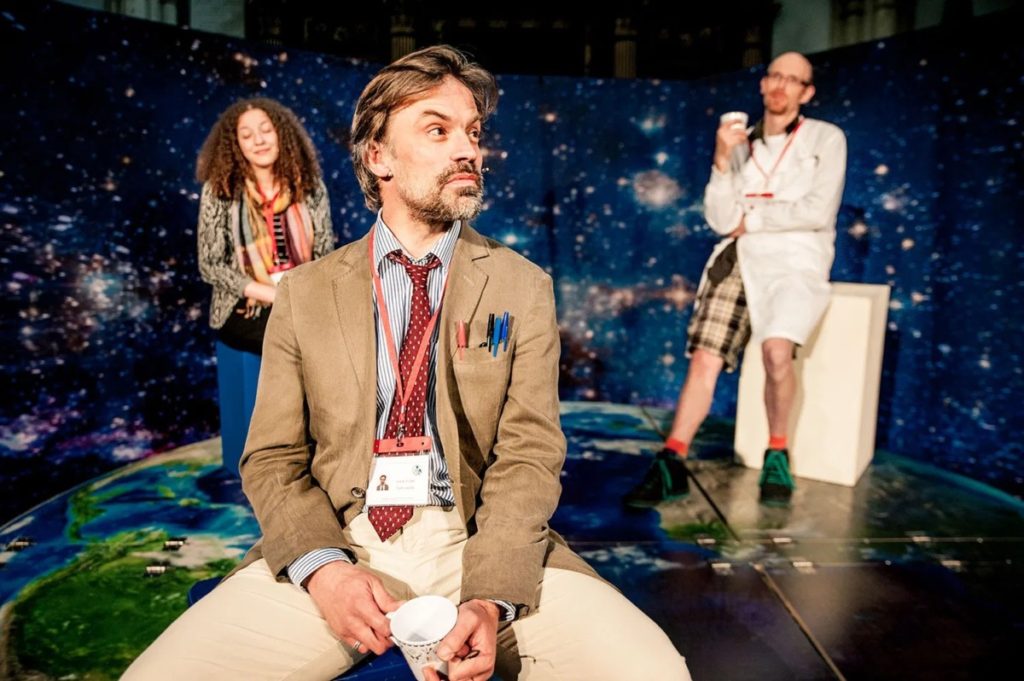
While our focus is on equipping senior church leaders, we recognise that culture change has to happen at all levels to be sustainable. Our Scientists in Congregations programme funds strategic local churches to creatively explore questions around science and faith; past iterations of these grants have funded ‘Messy Science’ within the Messy Church movement, as well as imaginative initiatives using drama and music. These activities are additionally affirming the vocation of scientists within church congregations. Applications for our 2021/22 round of Scientists in Congregations are open until 31 January 2021, and we welcome applications from ISSR readers.
We also recognise the need to incorporate science into initial ministerial training, and to that end we have launched Science for Seminaries, grants of up to £60,000 for seminaries to explore innovative ways of bringing science into the theological curriculum, be it missiology, soteriology or apologetics.
The final strand of ECLAS’ work is in policy and influencing. Our colleagues based at Church House work closely with church advisors, facilitating training and knowledge exchange and the advising of bishops on topics from ethical investment to artificial intelligence.
Many believing scientists we know have been blessed in life and career to see glimpses of God both through scripture and in the laboratory, both in prayer and in observation and contemplation of the natural world. I know that most ISSR readers, like the present writers, reject the false opposition between science and belief in God. At ECLAS we have a wonderful team in place who hope to spread this conviction throughout the church, equipping communities of believers to delve more richly into God’s wonders and gifts.
Helen Billam is Communications Manager at Equipping Christian Leadership in an Age of Science.
Tom McLeish, FRS is Professor of Natural Philosophy at the University of York. He is Co-Director of Equipping Christian Leadership in an Age of Science. www.eclasproject.org