October 2021 Blog Post

Human Flourishing Andrew Briggs and Michael J. Reiss   Can there be a bigger topic than human flourishing? Almost everyone cares about human flourishing, whether or not they use that term. Family roles, not only as spouse or parent, should be about promoting flourishing. Many professions, whether as teacher, pastor, solicitor, or doctor, are explicitly about promoting flourishing, and at their best so is every other way of earning a living and contributing to society through voluntary or employed service. Humans have been thinking about what it means to be human probably before writing was invented, and certainly ever since, whether it is Aristotle writing about εὐδαιμονία or the Psalmist asking God, ‘What is man that you are mindful of him?’. In our book Human Flourishing: Scientific Insight

By |2021-10-15T18:07:55+01:00October 15th, 2021|Categories: Blog|

September 2021 Blog Post

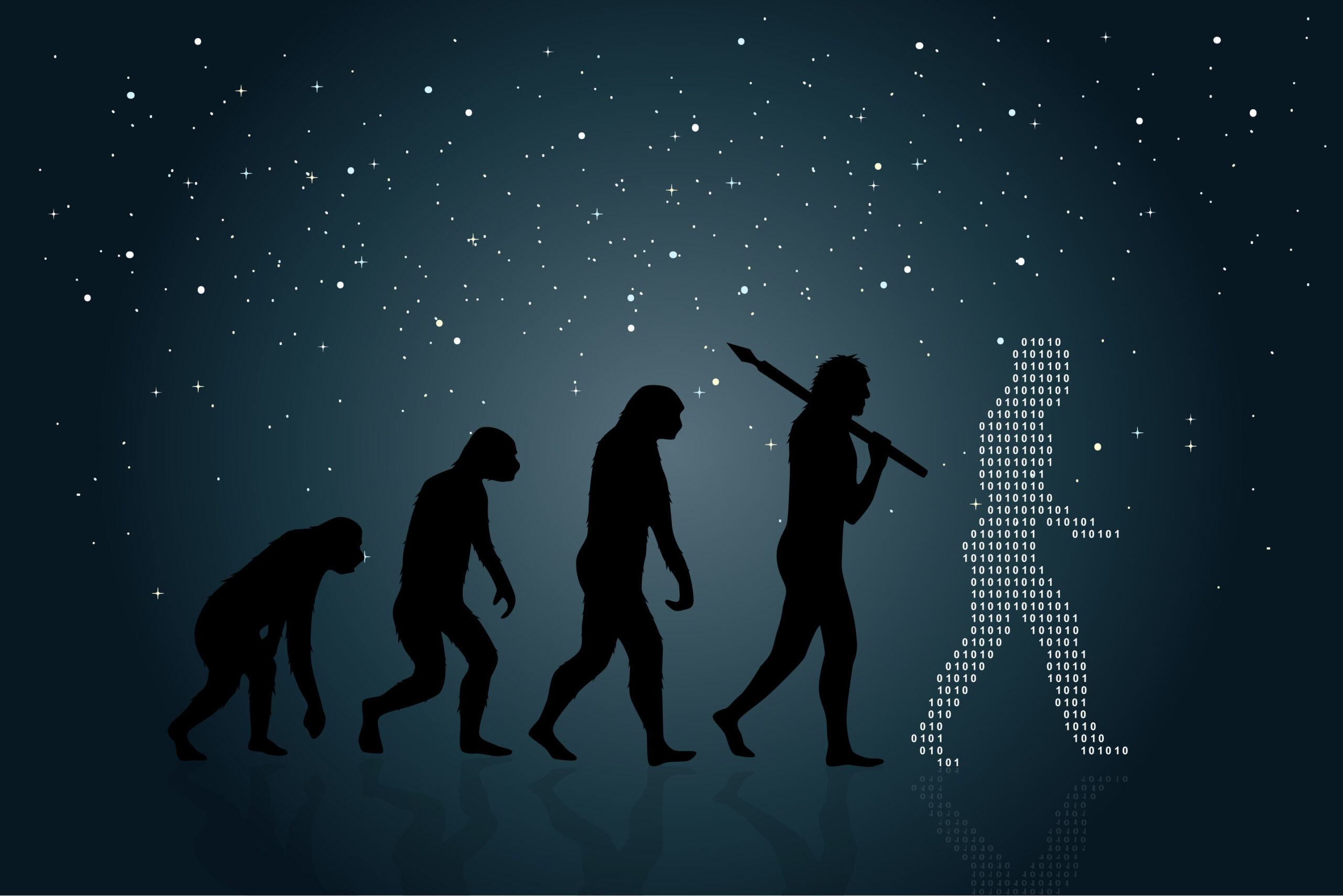
Is Artificial Intelligence Compatible with Evolution? (Part II) Javier Sánchez-Cañizares “Ciencia, Razón y Fe” (CRYF) “Mind-brain” Group. Institute for Culture and Society (ICS) University of Navarra   An artificial Evolution? Spanish scholar Gonzalo Génova insists on a simple definition that bears on AI: machines are defined by their purposes. Their goals are always particular, imposed by human programmers to solve concrete problems. Now, this leads us directly to reflect on the appearance of ends in nature. What is an end? How should one define ends? Are they merely epistemic or do they possess an ontological entity? The question I want to raise is not simply the appearance of teleology in nature —a highly controversial question in the current philosophy of science— but whether one is entitled to think

By |2021-09-15T17:15:29+01:00September 15th, 2021|Categories: Blog|

July 2021 Blog Post

Is Artificial Intelligence Compatible with Evolution? (Part I) Javier Sánchez-Cañizares “Ciencia, Razón y Fe” (CRYF) “Mind-brain” Group. Institute for Culture and Society (ICS) University of Navarra   Introduction “Many of us will die stroking a machine and being stroked by it.” Predictions of this caliber undoubtedly cause some inner jolt in most people. That machines appear at the end of our life does not imply in principle greater astonishment than their presence throughout the other moments of each human biography. However, the attribution of such a genuinely personal manifestation as compassion and affection —expressed through caresses— to a machine, in a moment as singular as death, raises in all its radicalism many questions on the specificity of the human being, on that of artificial devices, and on the

By |2021-07-15T19:38:57+01:00July 15th, 2021|Categories: Blog|

June 2021 Blog Post

The Social Brain of Religion Miguel Farias There is something uncanny about experimenting with people when they are performing religious actions, such as rituals. It’s not only the suspicion from the religious individuals about what we might be trying to find out about them — it’s the way in which we, experimenters, interfere with the flow of the ritual with our instruments and demands. For these, and other reasons, religious groups often refuse to take part in our studies. Sometimes, though, hard work, good networks, and fortune coincide: so we knock and doors are opened. The story I want to briefly tell here is one of a fortunate series of events. On 8 December 2019, one of my PhD students took a flight to

By |2021-06-16T19:07:32+01:00June 16th, 2021|Categories: Blog|

April 2021 Blog Post

The Public Sphere After Darwin: Popular Science Periodicals and the New Space for Debate Bernard Lightman York University On October 2nd, 1870, Thomas Henry Huxley, biologist and Darwin’s Bulldog, complained to his good friend, the physicist John Tyndall, that he felt as though he was being closely watched by his enemies. Every lecture, every book, every journal article was being subjected to close scrutiny for evidence that he held to unorthodox religious views. “Those confounded parsons,” he wrote to Tyndall, “seem to me to let you say anything while they bully me for a word or a phrase.”(1) But four years later it was Tyndall who was put under the microscope. His “Belfast Address” (1874) given as president of the British Association for the Advancement of Science,

By |2022-07-26T21:05:29+01:00April 20th, 2021|Categories: Blog|

John Polkinghorne (1930-2021)

by Fraser Watts   John Polkinghone was notable among the many scientists who have turned to work on science and religion in having an exceptionally distinguished scientific career, and in giving it up completely to devote himself to church ministry and work on science and religion.    His scientific work was on fundamental particle physics, the subatomic particles that cannot be measured but which are thought to influence the observable world. He was present at a number of the key conversations that led to scientific advances in particle physics. In 1968, not yet 40, became Professor of Mathematical Physics at the University of Cambridge. Stephen Hawking was among his students, and his remarks about Hawking’s work often began with, ‘the trouble with Stephen is…’. In 1974 he was

By |2021-04-05T21:44:25+01:00April 5th, 2021|Categories: Blog|

March 2021 Blog – Precisely the Properties We Should Expect If…

Precisely the Properties We Should Expect If… by Thomas Jay Oord   We know Richard Dawkins for his provocative claims. After examining both simple and complex life, Oxford’s former Professor for Public Understanding of Science reaches this conclusion: the universe has “precisely the properties we should expect if there is, at bottom, no design, no purpose, no evil and no good, nothing but pointless indifference.”  Because he’s an atheist, it’s no surprise Dawkins thinks the universe is without ultimate meaning. As a biologist, he points to randomness, suffering, and evolutionary dead ends to support his view. As an observer of history, he points to harm religious people and institutions sometimes cause. But does science require us to reject God? Or consider life meaningless? Another British intellectual, William Paley,

By |2021-03-15T19:56:53+00:00March 15th, 2021|Categories: Blog|

February 2021 Blog – India: Part 2

WORLD CONGRESS OF FAITHS: YOUNGHUSBAND LECTURE, 2020 An Indian Christian view of science and religion by David L. Gosling Clare Hall University of Cambridge   By profession a physicist, I have lived and worked in India for a number of years, during which I learned basic Sanskrit, and associated with members of the major Indian religions, namely the Hindu tradition, Islam and Christianity. All three of these traditions have manifested varying levels of knowledge and interest in particular aspects of science – notably astronomy, mathematics, medicine and chemistry – but it was not until the late eighteenth and nineteenth centuries that the full range of the sciences and the scientific method began to capture the imagination of educated India. Not surprisingly, the Hindu majority were the first to

By |2021-02-15T19:40:45+00:00February 15th, 2021|Categories: Blog|

February 2021 Blog – India: Part 1

IISR (Indian Institute of Science & Religion) XAVIER’S SCHOOL CAMPUS, 4 RAJNIWAS MARG, DELHI – 110 054 iisrdelhi@gmail.com, jobksj@gmail.com     Importance of Science and Religion   Modern science and religion are arguably two most powerful influences in our society today, leading and guiding the life and destiny of people. This is particularly true of India where traditionally both science and religion have flourished and enjoyed great respect and wide support. In the past many outstanding scholars and scientists have pointed this out time and again. For instance, Alfred North Whitehead already in 1925 in his well-known Science and the Modern World, wrote: “When we consider what religion is for mankind, and what science is, it is no exaggeration to say that the future course of history depends

By |2021-02-02T00:53:00+00:00February 2nd, 2021|Categories: Blog|

Go to Top