December 2020 Blog: Moving Towards a theology of science – the ECLAS project

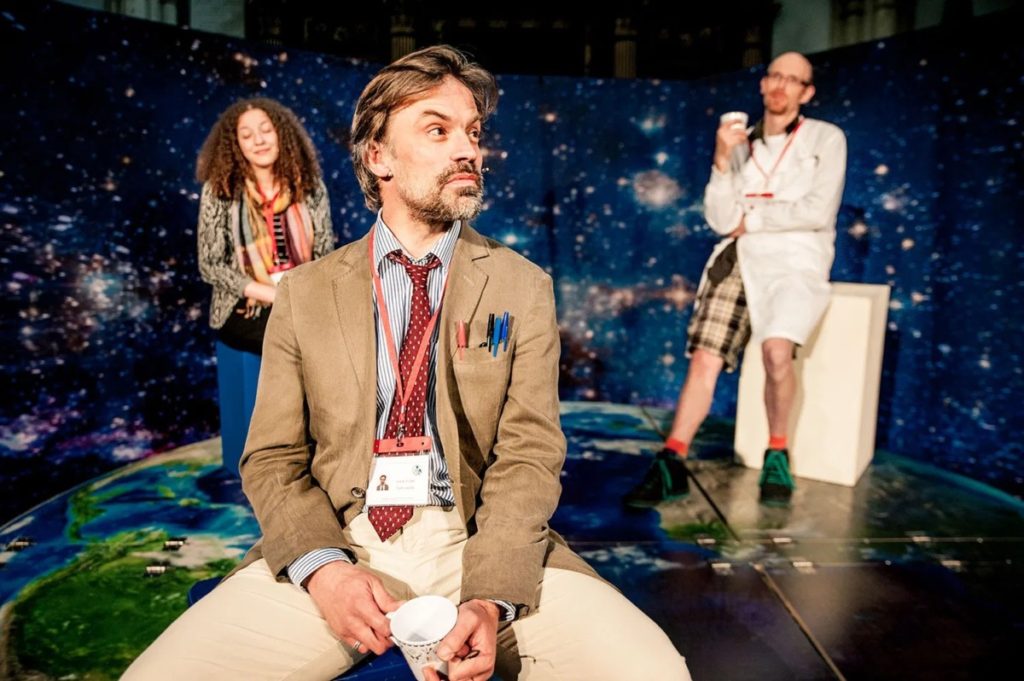
    By Helen Billam and Tom McLeish   Those of us who are both Christians and scientists are certain to have faced questions over the years about how our two worlds coexist. Surely, we have been asked, we can’t follow both the rational scientific method and hold a religious faith? These questions reveal misconceptions that have dogged the science-faith dialogue for too long, and stem from both a confusion of how faith and science work, and a long history of inventing conflict where none exists. At Equipping Christian Leadership in an Age of Science (ECLAS), we are not only concerned with correcting these outdated misconceptions, but with creating a holistic theology and church-practice of science. We want to move beyond debates of science as secular or sacred,

By |2020-12-15T23:49:31+00:00December 15th, 2020|Categories: Blog|

November 2020 Blog Post: Poems on Science and Religion

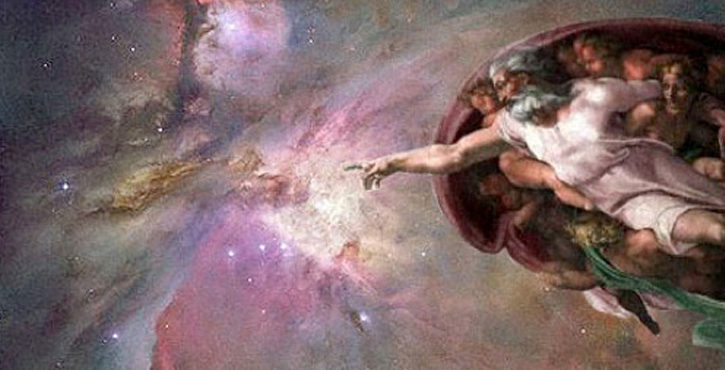
Poems of David Jou Translated from Catalan by Laia Cartro      The dialogue or the conflicts between science and religion go beyond an intellectual and political question and permeate into deep emotional dimensions and implicit cultural and psychological prejudices. Studying how these questions appear in poetry may be helpful to realize from a relatively unusual perspective these relations. On the other side, the relations between science and religion may be a fresh source of inspiration for poetry bringing to a relatively general audience some of the new conceptual aspects of science in the context of a religious expression, in an indirect but accessible way. The poems of Cantico cosmico by the well-known poet, priest and social activist Ernesto Cardenal (Nicaragua, 1925 – 2020) are an outstanding example

By |2020-11-18T15:55:05+00:00November 18th, 2020|Categories: Blog|

October 2020 Blog Post: Waiting for a Chinese Enlightenment…

Oliver Davies Professorial Fellow, Interdisciplinary Centre for the study of Philosophy and Cognitive Science, School of Philosophy, Renmin University of China Emeritus Professor of Christian Doctrine, King’s College London     After many years visiting, often to teach, there is one thing I have never understood about China. Why have they not yet had their own Enlightenment? The question has often been asked: why did China not experience its own Enlightenment several centuries ago, at the point where it could have followed the West, and indeed, when it probably had parity with the West in terms of technological innovation? This has consolidated in Chinese studies as the so called ‘Needham question’. The celebrated Sinologist Joseph Needham pointed to the fact that the learning and writing of Mandarin, a

By |2020-10-16T21:09:01+01:00October 16th, 2020|Categories: Blog|

ISSR’s new project on ‘Understanding Spiritual Intelligence’

    Fraser Watts     ISSR will be starting its next major research project in October this year, our third large research project sense since 2015. This project, on the interface of Artificial Intelligence (AI) and religion/theology, will focus on ‘understanding spiritual intelligence’, and is funded by the Templeton World Charity Foundation, as part of their Diverse Intelligences initiative.   Religion has often shown concern about AI. Some of that concern has focused on the mechanistic view of the human mind to which AI may appear to be committed, or on human and social impact of the increasing digitalisation of work and social life. However, in this project we want to use AI to make a constructive contribution to the understanding of religion. Computational theorising has made

By |2020-09-15T18:45:45+01:00September 15th, 2020|Categories: Blog|

Technology Can Help Us, but People Must Be the Moral Decision Makers

(Originally posted for the Templeton World Charity Foundation)   As we grapple with a global pandemic, technologies such as AI and machine learning may help us defeat it, but we must make a moral decision about how our society will change.   by Andrew Briggs     The pace at which technology is changing the fabric of society is accelerating. Facebook launched in the United States in 2004. The iPhone did not exist prior to 2007. In less than 20 years the fabric of life has been radically changed by mobile computing, social networks, and more recently AI and machine learning. These technologies are frequently demonized. Developments in machine learning and AI are typically portrayed as steps along a path that ends with robot domination of humanity, a

By |2020-08-27T20:21:28+01:00August 27th, 2020|Categories: Blog|

Covid 19 and some of its implications for the school curriculum

by Berry Billingsley Education ministers in England, Wales and Northern Ireland have reversed their decision to use an algorithm to adjust teacher predicted grades for both A level and GCSE. Leaving the last word to an algorithm demonstrates the problem with applying rules and models backwards - to "predict" individual cases. If the regulation body, Ofqual had created some persona characters to imagine individuals opening their results they might have discovered ahead of time, some of the consequences that then became real people and have dominated in the news. Across the nation each year when exams work as they should, some people fail but how will any student feel about being awarded a fail for an exam that they couldn't sit? The historian Edward Gibbon has said of

By |2020-08-28T17:10:44+01:00August 27th, 2020|Categories: Blog|

July 2020 Blog Post: What is ISSR For?

Fraser Watts   What is ISSR for? I think the answer that was assumed by those of us who gathered in Granada in 2002 for the inaugural conference under the leadership of John Polkinghorne was that the task of ISSR was to give intellectual leadership to work in science and religion. I think that was the right answer though, with hindsight, I don’t think we did a great job of responding to the challenge. We did not actually give much intellectual leadership to the field.   Like many organisations, ISSR has sometimes become preoccupied with its institutional affairs, and often necessarily so. However, there is much that is encouraging about the present state of ISSR. We have a growing membership, and I sense a good deal of eagerness

By |2020-07-16T16:09:07+01:00July 16th, 2020|Categories: Blog|

June 2020 Blog Post: Reflections During COVID-19 (Part 2/2)

    Reflections on “Closer To Truth” During the Pandemic Robert Lawrence Kuhn   Never before have we all been so similar. When should we get groceries? How much toilet paper do we have left? Why is my mask fogging my glasses? And if these be our worries during the pandemic, we are the lucky ones.   I have been writing and hosting Closer To Truth (CTT) for over 20 years — PBS/public TV stations (U.S.); Closer To Truth website; Closer To Truth YouTube channel — and never before have I felt as close to the CTT community, who are passionate in their pursuit of science and religion (with diverse interests and views, of course).   I’ve come to see that there is a small subset of humanity

By |2020-06-20T14:54:48+01:00June 20th, 2020|Categories: Blog|

May 2020 Blog Post – Reflections on COVID-19

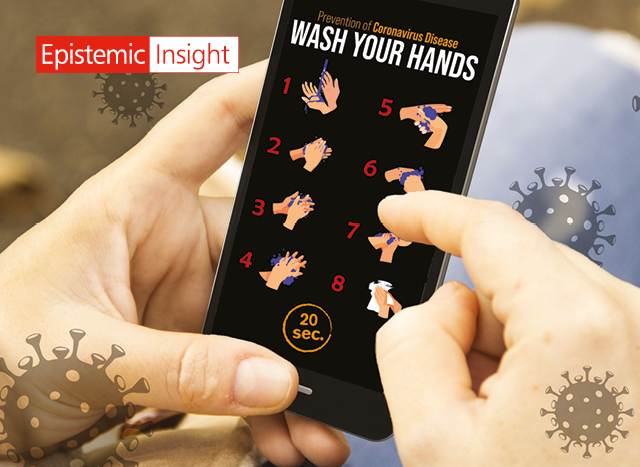
BIG QUESTIONS IN CHALLENGING TIMES Prof Berry Billingsley, Professor of Science and Education and Director of LASAR (Learning about Science and Religion)   COVID 19: This is a moment to ask Big Questions about human personhood - and to clarify for students and the wider public that there are many different types of questions that individuals and society are asking at this time. I have written about this here http://www.epistemicinsight.com/?p=1315   It is a time to value Education and a moment to reflect on the impacts of this pandemic on Education now and in the future. What will we keep, what do we want to keep, what will we be glad to lose?   It is a moment to reflect on the role and nature of science - so this

By |2020-05-18T19:17:46+01:00May 18th, 2020|Categories: Blog|

April 2020 Blog Post – Science, Religion & Coronavirus

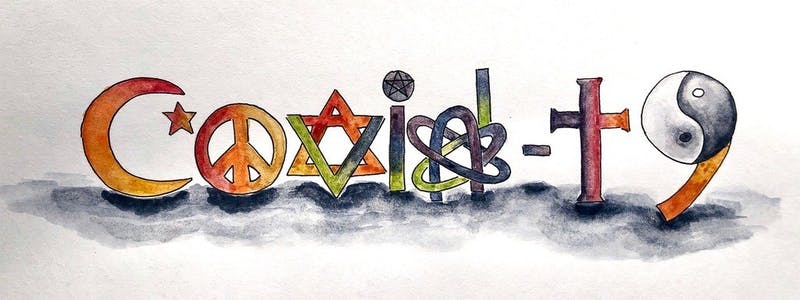
Science, Religion and Coronavirus   Fraser Watts       There are both scientific and religious aspects of the coronavirus pandemic. In this blog, I will comment on both and the connection between them. I suggest that there is a fruitful convergence between scientific and religious perspectives on coronavirus and that this may point towards a new, more applied, paradigm for work on the interface of science and religion.   Faith in Science We have come to depend on science to keep us safe from health emergencies such as this; and many of us are rather surprised and shocked that science has let us down. What modern medicine has achieved is remarkable, but its limitations are currently exposed.   Humanity has not always had the kind of confidence

By |2022-05-17T20:45:41+01:00April 8th, 2020|Categories: Blog|

Go to Top