December 2022 Blog

Wentzel van Huyssteen (1942-2022) in memoriam Niels Henrik Gregersen, University of Copenhagen   The prominent member of ISSR, J. Wentzel van Huyssteen, sadly died February 18 this year, a few months before his 80th birthday. At the 2022 Meeting of the American Academy of Religion in Denver, the ISSR arranged a session on “The Legacy of J Wentzel van Huyssteen: Commemoration and Critiques” on November 19 with panelists including Danie Veldsman, Nancy Howell, Kirk Wechter-McNelly, Andrew Rick-Miller, and myself.  The point of the session was to take stock of van Huyssteen’s work up from his early career to his mature work, epitomized in his Gifford Lectures, Alone in the World? From 2006. The session turned out to be moving by including also personal reflections from the panelists and

November 2022 Blog

John Polkinghorne – a dear academic, theological and personal friend Michael Welker     In 1993 the Center of Theological Inquiry in Princeton, under the leadership of Dan Hardy, sponsored a four-year consultation in which an interdisciplinary group of scholars (including the fields of cosmology, physics, biology, chemistry, environmental studies, philosophy, religious studies and theology) moved from an exchange via different disciplinary and individual academic approaches to the dialogue between science and theology. This is where John Polkinghorne and I met and first became intellectual friends and then, in the course of several years, also personal friends.   Together we developed international and interdisciplinary consultations and conferences, cooperated in the publication of articles and books, and even wrote one book together. John received the prestigious Von Humboldt Research

October 2022 Blog

Understanding Spiritual Intelligence: A Progress Report on an ISSR Research Project   Fraser Watts We are just over two years into the ISSR research project on Understanding Spiritual Intelligence, funded by TWCF. I posted a blog at the start about what we intended to do. This is an update on where we have got to. We had to do quite a bit of hard conceptual work on what we mean by “spiritual intelligence”. We do not assume that there is a “God spot” in the brain, or a module for spiritual intelligence in the cognitive architecture. We assume that when humans are operating in spiritual mode, that they are using the same mental resources as they use for everything else. We also do not assume that spiritual intelligence is

September 2022 Blog Post

Feeling Science, Thinking Religion Donovan Schaefer On a warm autumn evening at St. Anne’s College, Oxford, a group of scientists, theologians, and philosophers sat down for a candle-lit dinner to discuss the relationship between science and religion. Our speaker was physicist Andrew Briggs, and his topic was “Theory in Science and Faith.” But instead of starting with God, Prof. Briggs began with science; and not science as an institution, as truth, or even as a set of ideas, but as an experience. “I confess,” he told us, “that my engagement with a scientific problem produces an extraordinary cycle of effects in me: until I have understood something to my satisfaction, or solved a problem—or even got an experiment to work—I go through a physical pain which can be

By |2022-09-15T21:07:04+01:00September 15th, 2022|Categories: Blog|Tags: , , , , , , , |

June 2022 Blog Post

The World of the Early Christians: Lessons for Today   Doru Costache   In a previous essay I have mentioned my recent book, Humankind and the Cosmos: Early Christian Representations, published by Brill in July 2021. In researching the topic and in writing the book, I have been amazed by the variety of early Christian attitudes and approaches to the nature and the universe, especially by the anchoring of those attitudes in the multidisciplinary soil of philosophy, science, scriptural interpretation, spirituality, and theology. The fact that the scientific culture of that age—from the second to the early fifth century—has become obsolete is of no consequence. What matters is the interest of the early Christians in comprehending reality, together with the fact of doing so at the nexus of

By |2022-06-15T17:05:11+01:00June 15th, 2022|Categories: Blog|

April 2022 Blog

The World of the Early Christians: A Complex Worldview   Doru Costache   The task of summarising how the early Christians represented reality is not easy. The writers of that era did not produce systematic discourses “On the World,” their interests being elsewhere. Yet the world as they perceived and inhabited it is very much present in their writings. It is from there that we learn the extent to which the early Christian experience—unlike modern urban societies—included the environment and reached towards the broad expanses of the cosmos. Another aspect worth noting is that, regardless of how nontechnical the writings of the early Christians were, many of their works incorporated scientific information, by the standards of those times. This information often was presented as a cultural given, shared

By |2022-04-16T16:17:14+01:00April 16th, 2022|Categories: Blog|

March 2022 Blog Post

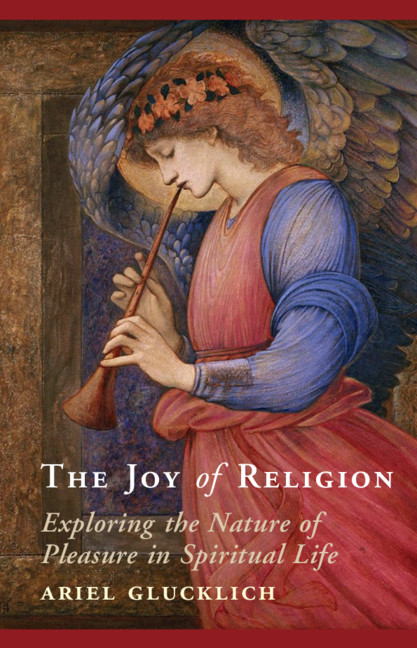
The Joy of Religion: Exploring the Nature of Pleasure in Spiritual Life Ariel Glucklich Cambridge, UK: Cambridge University Press, 2020   The Joy of Religion is a book that combines religious-historical description with evolutionary-psychological analysis in order to explain the complex manners of controlling and enhancing pleasure in religious history and in social evolution. All religions describe spiritual experiences as pleasant, and the goal of the religious pursuit as profoundly joyful. But many religions also condemn sensory pleasures and the desire for objects of pleasure. In this book, I resolve this apparent contradiction by showing how religious practices that instill self-control and discipline transform one type of pleasure, novelty pleasure, into the pleasures of mastery and play. Using historical data and psychological analysis, I detail how the rituals,

By |2022-03-15T20:13:18+00:00March 15th, 2022|Categories: Blog|

February 2022 Blog Post

Science and Religion Per Se John L. Schellenberg   The term “religion” as it appears in the phrase “science and religion” is, for those who hear or use the phrase, quite commonly tied to particular examples of human religious life. As is well known, because the various intellectual activities that evolved into our field were carried out against a broad background of Christian influence, it was natural, early on, to think specifically of Christian examples. And inquiry concerning science and religion under these circumstances assumed a corresponding shape, with much discussion of what the best results of science meant for a proper understanding of Christian religious life and for the possibility of rational participation in it. Attention was also given, more abstractly, to what sciences such as physics

By |2022-02-15T22:23:33+00:00February 15th, 2022|Categories: Blog|

December 2021 Blog

Reimagining ISSR Muzaffar Iqbal The immediate impetus for this blog is the November 2021 post by Fraser Watts (“Cross-cultural Issues Regarding ‘Science and Religion’”), wherein he expresses reservations about calling ISSR a society for “science and religion”. The concerns raised there are a continuation and expansion of what Watts had expressed in his July 2020 blog (“What is ISSR For?”). Both posts are essentially concerned with the self-claimed identity of ISSR “wanting to be an international and multifaith society.” This introspection by a founding member of ISSR, who is also its current Executive Secretary, signals a possible opening of space for reflection and self-critique, which will, one hopes, lead to certain changes in its programs and activities. The concerns raised by Watts are so fundamental that one wonders

By |2021-12-16T16:45:54+00:00December 15th, 2021|Categories: Blog|

November 2021 Blog

Cross-cultural Issues Regarding “Science and Religion”   If ISSR was starting from scratch, and if I was part of a discussion about what it should be called, I would have reservations about it being set up as a society for “science and religion”.     Both of those terms are somewhat problematic, but the problems are greater for “religion”. It is a term that seems to have changed its meaning quite radically in the latter part of the 19th century, and which also means different things in different faith contexts. The problems associated with the term have been set out by scholars such as Wilfred Cantwell Smith and Nicolas Lash, but those working in science and religion have not generally taken much notice of their critique of the concept

By |2021-11-15T17:18:41+00:00November 15th, 2021|Categories: Blog|

Go to Top