November 2024 Blog

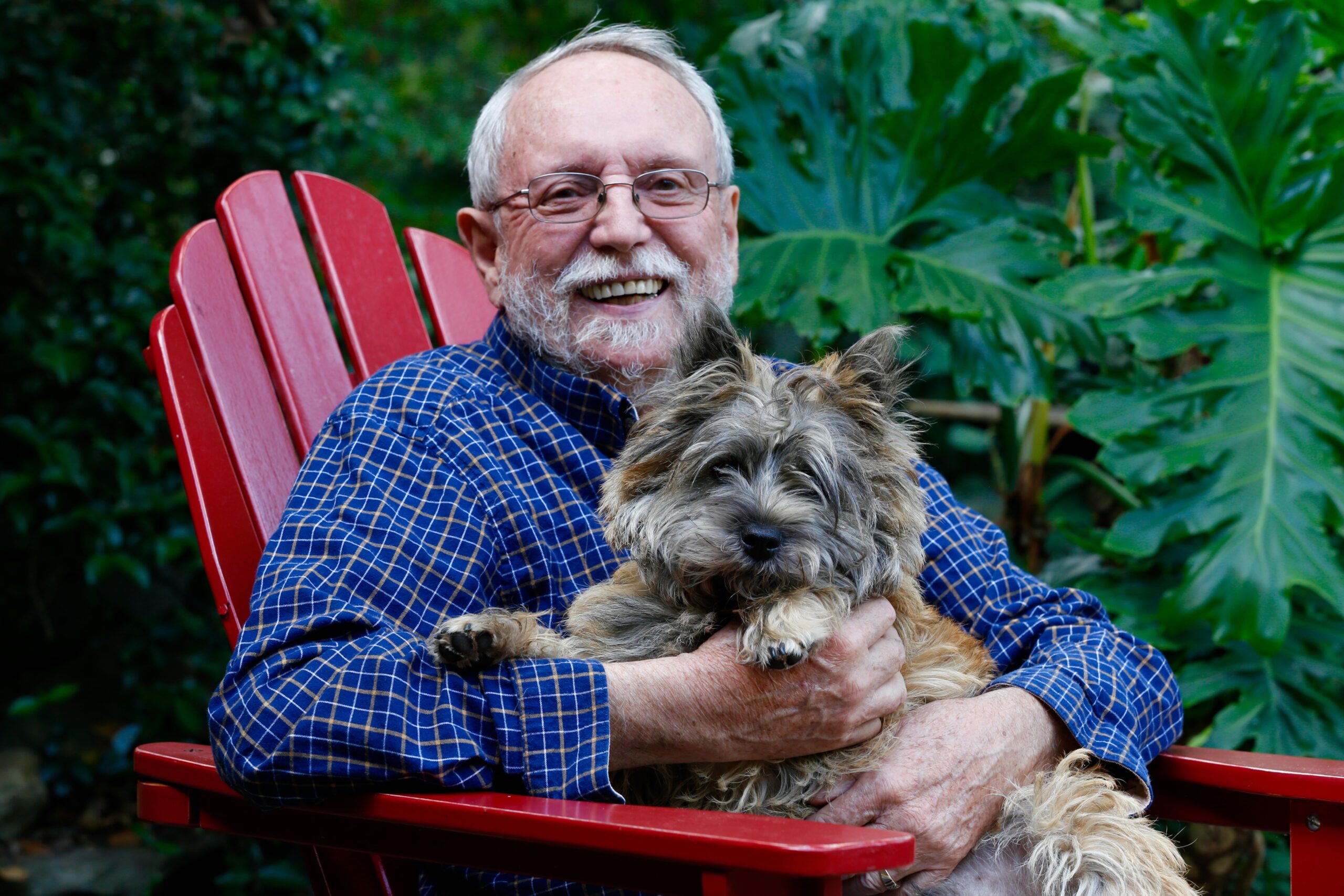
Michael Ruse (1940-2024) by Michael Reiss   With the death of Michael Ruse on 1 November, the field of philosophy of science has lost both an intellectual giant and perhaps its most engaging member.   Michael was born near the beginning of the Second World War, on 21 June 1940, in England and brought up in a Quaker environment. His father was a conscientious objector, which wasn’t easy at the time, and his mother died when Michael was 13, which he unsurprisingly found very tough. Michael attended Bootham School in York, a Quaker school, and then went to the University of Bristol to read philosophy and mathematics. There, he had something of an epiphany when first hearing about Descartes’ Meditations in a lecture. I can remember him telling

By |2024-11-15T19:31:42+00:00November 15th, 2024|Categories: Blog|Tags: , , , , , , , |

October 2024 Blog

Can the DNA of ISSR Be Changed? Muzaffar Iqbal President of the Center for Islamic Sciences   Preamble The contemporary “Science and Religion” discourse is historically rooted in the redefinition of “science” and “religion” that took place in Europe under the complex kinetic forces arising out of the Scientific Revolution, the Protestant Reformation, and—more importantly—through introduction of a radical new concept of the cosmos and Insān, which is the gender-neutral Arabic word for a human being. This redefinition was the result of an ugly divorce that continues to create binaries (see below).  The SR-Discourse has gone through distinct phases over the last three centuries, but its anatomy has always remained fixed within the broad spectrum of this relationship conceived as two entities in the equation which are either

By |2024-10-15T22:52:37+01:00October 15th, 2024|Categories: Blog|Tags: , , , , , , |

September 2024 Blog

ISSR After More than 20 Years: Where We Came From, and Where We are Going Niels Henrik Gregersen, ISSR President   ISSR from 2002 to Today: Three Developments When I was elected as President of ISSR in 2023, I had the feeling of coming home to the fruitful atmosphere of the early days of the society. Much remained the same. There is a strong sense of the overall purpose of the Society as an active learned society, and there is a well-functioning institutional structure as well—even though we can no longer afford to rent property, as we earlier had it in St Edmund’s College in Cambridge.   Over the last twenty years, ISSR has been in a process of development through different Executive Committees and Presidents—from John Polkinghorne

August 2024 Blog

A Landscape of Consciousness Robert Lawrence Kuhn   “Explanations of consciousness abound and the radical diversity of theories is telling. Explanations, or theories, are said to work at astonishingly divergent orders of magnitude and putative realms of reality.”   That’s how I begin “A Landscape of Consciousness: Toward a “Taxonomy of Explanations and Implications” [“Landscape”] — my review of theories of consciousness published in Progress in Biophysics and Molecular Biology (Volume 190, August 2024, Pages 28-169). The print PDF can be viewed or downloaded on the ScienceDirect page, upper left, Open Access — though online easier to read and navigate.   Landscape is the product of a lifetime. My PhD was in neurophysiology at UCLA’s Brain Research Institute (1968). I am creator and host of Closer To Truth, the long-running (25

July 2024 Blog

Science, religion, and health Lluis Oviedo, OFM Pontifical University Antonianum, Rome Studies on religion, health, wellbeing and flourishing have proliferated in recent years to the point of becoming unmanageable. Theologians are unsure what to make of this vast body of research. On the one hand, the results clearly point to a moderately positive effect of religion on these human dimensions; indeed, they arouse a certain renewed interest in religion and its function or utility. On the other hand, their methods (mostly empirical) and approach (typically pragmatic) surprise theology as something quite alien to its own tradition. A question worth exploring further is whether the sub-discipline of science and religion is better equipped and could provide a better framework for receiving and managing this research. After all, health sciences

By |2024-07-15T20:28:46+01:00July 15th, 2024|Categories: Blog|Tags: , , , , |

June 2024 Blog

A New ISSR Research Grant from TWCF Fraser Watts   ISSR has received a large grant from the Templeton World Charity Foundation (TWCF 2023-32537) as part of the TWCF initiative on The Science of Religious and Spiritual Exercises (SORSE). Religious and spiritual traditions contain repositories of ancient practical wisdom about how to live well, and they often prescribe practices that help people to foster deeper connections with themselves, with other people, with the world around them, and with the transcendent.    Such practices are often recommended simply because they are proper, rather than because of their effects, but there is increasing evidence that religious and spiritual exercises have considerable well-being benefits. The overall SORSE program has three main objectives: Focus on expanding our understanding of the science of

By |2024-06-15T18:52:35+01:00June 15th, 2024|Categories: Blog|Tags: , , , , , , , , , , , , , |

February 2024 Blog

Like Oil and Water?  Can Religion Cooperate with Science to Counter Adverse Global Environmental Change?  In their 2010 book, Merchants of Doubt: How a Handful of Scientists Obscured the Truth on Issues from Tobacco Smoke to Global Warming (Bloomsbury Press), historians Naomi Oreskes and Erik Conway traced the political roots of popular skepticism concerning the scientific research examining the health and safety impacts of major corporate and technological sectors.  Professional science administrators and lobbyists have worked on “behalf” of capitalism, free markets, and NATO to curtail public concerns about the tobacco, nuclear, and petroleum industries. Their methods cast the scientists studying nuclear winter and changes in the atmosphere’s gaseous composition as left-wing, self-interested, economic nay-sayers. These critics assert the geophysical models underlying studies of global warming are highly

By |2024-02-15T19:48:49+00:00February 15th, 2024|Categories: Blog|Tags: , , , , , |

January 2024 Blog

Twenty-Five Years of Science and Religion in Latin America Ignacio Silva Universidad Austral Latin America is an extremely large and diverse region of the world, in which different trends on academic work in science and religion exist. I have previously written on this topic back in 2015 (check my Zygon Journal article here), and much has changed since then. I was then at the mid-point of a seven-year journey leading, together with Andrew Pinsent, projects for Latin America from the Ian Ramsey Centre for Science and Religion at the University of Oxford (funded by the John Templeton Foundation). At that point, though revealing a promising landscape, my initial diagnosis was that, for most of it, Latin American scholars working in science and religion were isolated both among themselves

By |2024-01-16T01:57:59+00:00January 16th, 2024|Categories: Blog|Tags: , , , , , , |

December 2023 Blog Post

Islam and Science: Origins, Current Developments, and Hopes for the Future Shoaib Ahmed Malik Shoaib.malik@stmarys.ac.ak    This blog post presents an insider's perspective on the evolving relationship between Islam and Science. As an active participant in this field, I begin with a historical context of the broader Science and Religion domain, setting the stage for a deeper dive into Islam and Science. The focus then shifts to recent advancements in this area, spotlighting key developments, influential thinkers, and significant milestones. This piece is tailored for fellow academics interested in the maturation of Islam and Science as a distinct and burgeoning area of scholarly research and dialogue.    While this post offers a foundational overview, it is intended primarily as an introduction to the subject. If you would like

By |2023-12-15T23:33:24+00:00December 15th, 2023|Categories: Blog|Tags: , , , , |

Call for Papers – Popular Culture Association: Science and Religion in Popular Culture

Call for Papers - PCA 2024 March 27-30, 2024 Chicago Marriott Downtown Magnificent Mile   The field of science and religion, while relatively new as an identifiable field of study, has been growing fast in methodological sophistication and scope over the past thirty years. Similarly, so too has popular culture studies. These two growing fields of scholarly investigation have had little contact until last year in San Antonio. Now in our second year, scholars who dip into both the ‘territories of “science” and “religion”’, investigating their dynamics, however, that may be defined, at work in texts of popular culture are invited to submit to the second year of the science and religion and popular culture area at PCA.   This area is for those scholars who are working

By |2023-09-15T19:50:59+01:00September 15th, 2023|Categories: Science & Religion News|Tags: , , , , |

Go to Top